|
Georgia's agribusiness sector contributes over 57 billion dollars, or about 16 percent, to the state's $350 billion dollar annual economic output.
Here are some of the numbers (from the University of Georgia CAES):
- The farm input and machinery sector contributes $1.8 billion and employs over 14,000 people. Farm inputs include seeds, feeds, fertilizers, and machinery, plus the specialized firms that provide services to farmers and foresters.
- The food and fiber processing sector includes the firms that take the raw materials and produce the products we use. All of these firms provide almost 170,000 jobs and contribute $31 billion to the economic output.
- Food wholesale and retail outlets contribute $2.3 billion and over 98,000 jobs to Georgia's economy. This component includes the large grocery store chains and their suppliers.
- The food service industry including restaurants and institutions is responsible for over 212,000 jobs and $6.1 billion of output.
- The total network is dependent upon the activities within the farm gate. The farm and forestry production sector represents over 85,000 jobs and contributes $7 billion in output. It is big business and this interlocking economic network is vital to both rural and urban Georgians.
- According to a University of Georgia study, one in every seven Georgians works in an agriculturally related sector of our economy.

- Georgia ranks 1st in the nation in broiler production, which is segmented by Value, Number and Pounds. Georgia accounts for $3.08 billion of the $15.1 billion value of U.S. Production, according to 1998 USDA figures. In number, Georgia is first with 1.20 billion of the U.S. production of 7.93 billion broilers. And in poundage, Georgia is first at 5.9 billion pounds. Georgia is also first in Eggs.
- Georgia ranks #1 in peanuts. Our farmers grow about 1.3 billion pounds of peanuts. Grown in 79 counties, peanut plants flower above ground and fruit below ground. It takes 550 peanuts to make a 12 oz. jar of peanut butter.
- Georgia ranks #1 in pecans. Our farmers grew 31 percent of the nation's pecans, or about 105 million pounds in 1997. Pecans, by the way, have no cholesterol.
- Georgia also ranks #1 in rye. Our farmers grow about 1.4 million bushels of rye, more than any other state.
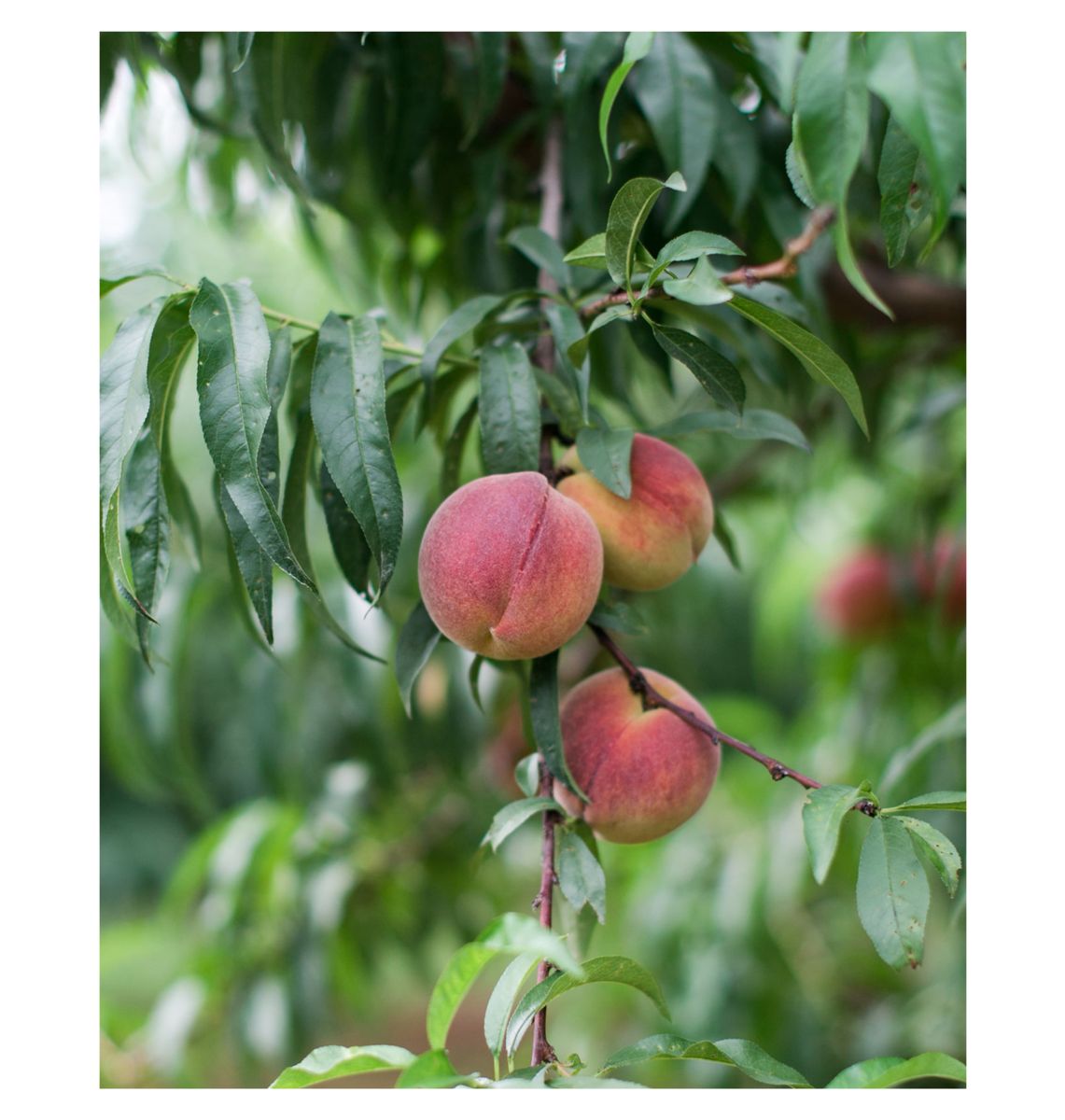
- Our farmers rank 2nd in production of Freestone peaches at 160,000,000 pounds. Value of production in 1997 was $35.2 million.
- Georgia is 3rd in the nation in fresh market tomatoes and 3rd in cotton at 1.9 million bales. A bale of cotton produces 215 pairs of jeans!
- Georgia ranks 4th in cultivated blueberries with 15,000,000 pounds. The 1997 crop value was $10.5 million.
- Georgia ranks 4th nationwide in net farm income at $2.0 billion, according to the 1997 USDA Agriculture Fact Book, behind California, North Carolina and Texas. (Net farm income measures the net value of agricultural commdities and services produced by the farm sector during a calendar year.)
- Georgia's gross farm income for 1997 set another record high at $6.8 billion, 3 percent above 1996 and 16 percent higher than 1995.
- Georgia is 6th in tobacco production at 89.3 million pounds.
- Georgia ranked 10th among all States in 1997 Cash Receipts. The $5.9 billion dollars includes crops, livestock, poultry and dairy products.
- In 1997, Georgia ranked 16th in the nation in value of agricultural exports with sales of 1.3 billion. Reliance on ag exports in Georgia is ranked at 22 percent.
- Farm production expenditures totaled $4.28 billion in 1997, down 1 percent from the $4.33 billion in 1996. Although down by $181 million from '96, feed purchases accounted for the largest single expense item in 1997, at $890 million.
- Nationally, Georgia is ranked 7th in sweet potatoes (240,000 cwt); 10th in grapes at 4,000 tons; 13th in sorgum for grain at 1.6 million bushels; 17th in oats at 2.2 million bushels; 18th in hay at 1.5 million tons; 21st in corn for grain at 55 million bushels; 22nd in winter wheat with 15.8 million bushels; and 26th in both apples (26,000,000 pounds) and soybeans (8,600,000 bushels).
- Vidalia Onions, recognized as some of the sweetest, best-tasting onions in the world, are grown in only 20 southeast Georgia counties around Vidalia (Toombs County). Controlled atmosphere storage has now increased shelf life to some 7 months. When fully planted, one acre will accomodate 70,000 onion plants.
- Georgia ranks 25th in the nation in cattle production. Georgia's cattle herd totaled 1.45 million head on 1/1/98, down 3 percent from the previous year. Morgan County has the most cattle, followed by Jackson, Mitchell and Wilkes Counties. Value of all cattle/calves on Georgia farms on 1/1/98 was $725 million.
- Milk production in Georgia totaled 1.49 billion pounds in 1997. The average number of milk cows during 1997 was 96,000 head, with production per cow averaging 15,430 pounds. Putnam County had the most cows on 1/1/98 at 9,300 head, with Macon County second at 9,200 head.
- Peanuts are grown in 79 counties in Georgia. In fact, Georgia grows 45 percent of all peanuts grown in the United States.
- Watermelons were planted on 34,000 acres in Georgia in 1997. The 651 million pounds were valued at $35.8 million.
- The number of farms in Georgia according to the 1997 Census of Agriculture is estimated at 43,000, unchanged from a year earlier. Land in farms totals 10.6 million acres, down from 11.8 million in 1996. In 1990, there were 48,000 farms encompassing 12.5 million acres in Georgia. The average farm size in Georgia is 265 acres, down from 274 acres in 1996.
- The number of farms in the United States (1997 Census of Agriculture) is estimated at 2.06 million, virtually unchanged from 1996. Total U.S. land in farms is 968 million acres. The average farm size in the U.S. is 470 acres.
- Agriculture production in 1999 shatters the age-old stereotype of traditional, self-sufficient farms that could produce only enough food to sustain a farm family. Today, fewer farms are producing more food and fiber than ever before. The production of an average American farmer feeds 120 people.

The 1997 Census of Agriculture (the latest year available) reported almost $5 billion in sales of Georgia agricultural products, an increase of 42 percent from 1992. Livestock, poultry and their products accounted for 62 percent of this total. The average sales per farm in 1997 was $123,789, up 43 percent from 1992.
Every five years, the census of agriculture takes a snapshot of Georgias agriculture. This picture is an invaluable tool for assessing trends and determining current needs of farmers at the local level. The census provides comprehensive, comparable statistics for every county in Georgia and the Nation. For example, according to the 1997 census, the Top 5 counties in Georgia based on total value of agricultural products sold are Jackson, Franklin, Tattnall, Coffee and Mitchell. The Top 5 counties based on value of crops sold are Colquitt, Sumter, Mitchell, Decatur and Tattnall. The top 5 counties in Georgia based on sales of livestock and poultry are Jackson, Franklin, Hall, Habersham and Madison.
While Georgia has a significant number of large farms (almost 18 percent had sales over $100,000), the census revealed 60 percent of the States farms sold less than $10,000 worth of agricultural products in 1997, compared to 58 percent in the 1987 Census of Agriculture. Thirty four percent of the farms recorded sales of less than $2,500 in 1997 compared to 30 percent in 1987. Indicating a continued rise in part-time farming, 40 percent of the farm operators worked 200 days or more off the farma 1 point increase from 1992.
The 1997 census revealed other interesting facts about Georgias agriculture, such as:
- 43 percent of farm operators considered farming to be their principal occupation.
- There were 10,671,246 acres of farmland in Georgia.
- The average size of a Georgia farm was 265 acres.
- The average age of farm operators in Georgia was 55.9 years.
- 10 percent of Georgias farmers were female.
- 3 percent of Georgias farmers were black and other non-white races.

Data from: Education Support Services of The University of Georgia Extension Service, Agriculture & Applied Economics Division, University of Georgia, Georgia Agricultural Statistics Service, 1997 Census of the U.S. Department of Agriculture, the American Farm Bureau and Georgia Farm Bureau.
|
|