Ag News
2026 Women in Ag Summit prepares attendees to Rise & Thrive
Posted on Mar 25, 2026 at 12:21 PM
Women representing numerous sectors of Georgia agriculture had a blast at the Georgia Farm Bureau Women in Agriculture Summit, where they spent March 19 and 20 networking, cultivating leadership skills, learning to advocate for agriculture on social media, and how to recognize and rebut fear-based food marketing campaigns.
Held in Savannah, the event drew farmers, Extension agents, ag teachers, USDA staff, county Farm Bureau staff and volunteers, showing the many roles women have in Georgia agriculture. The range of farm commodities attendees produce and ag sectors represented at the summit indicates how varied Georgia’s agriculture community is.
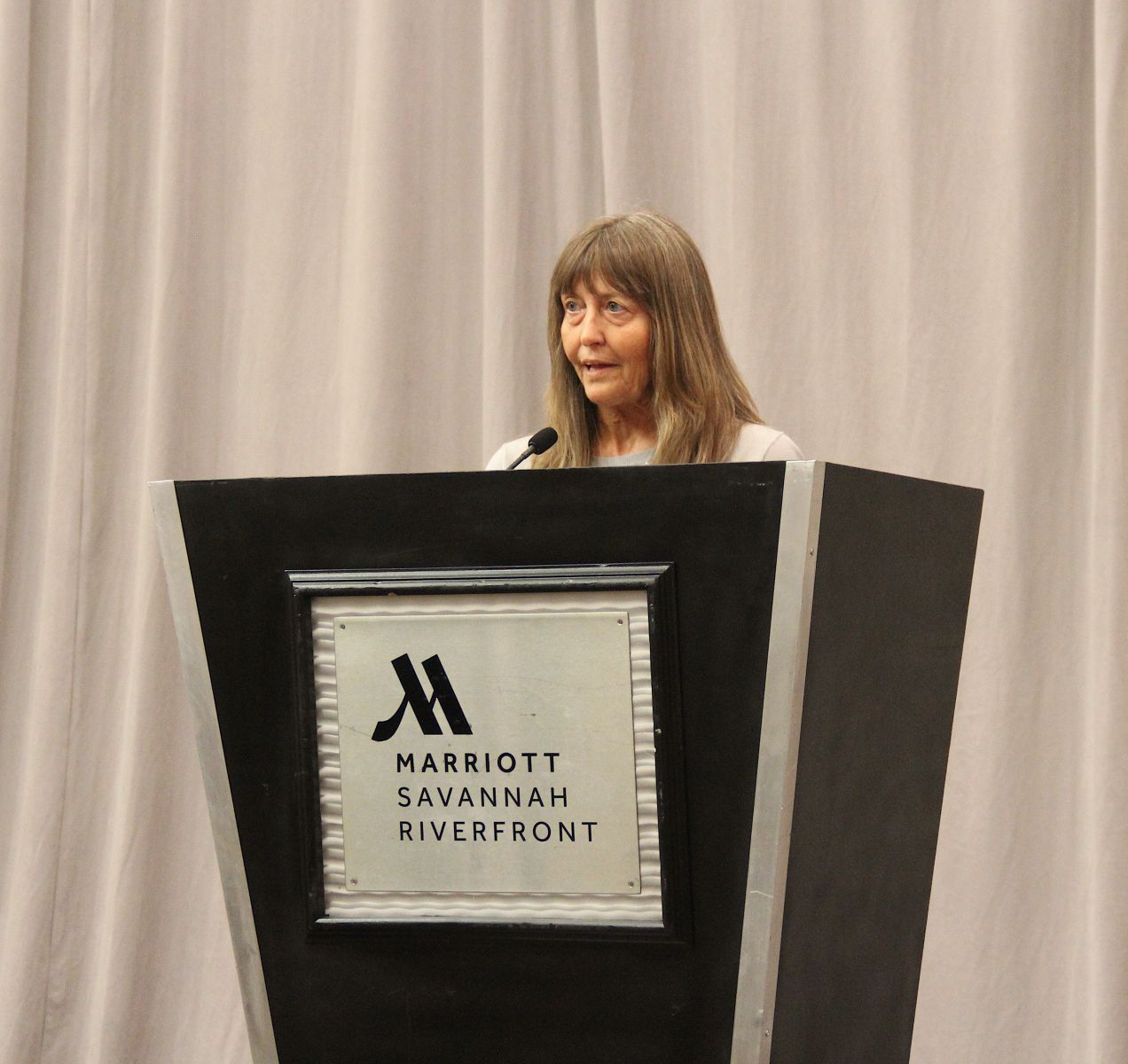
“It’s pretty special that we gathered for this summit during Ag Week, National Women’s History Month and during the International Year of the Woman Farmer,” said GFB Women’s Leadership Committee Chairman Romy Strickland, pictured above. “I hope the attendees leave this conference with renewed energy and new ideas for the ag promotion work they do in their communities.”
Strickland encouraged participants to take the things they learned at the conference back home and implement them.
“We hope you have found Farm Bureau to be a place you can plug into,” she said.
Many of the attendees enjoyed a pre-conference tour of the UGA Marine Education Center & Aquarium on Skidaway Island the morning of March 19. They saw native and invasive fish species found in Georgia’s coastal waters. They also learned about horseshoe crabs, how whelks grow their shells and participated in a hands-on lab activity where they used microscopes to identify tiny invertebrates present in the water by the center’s docks.
UGA holds the designation of being a Sea Grant University, which means it is tasked with doing research and education outreach about coastal issues just as the UGA College of Agricultural & Environmental Sciences & Fort Valley State University are land-grant universities that study issues pertaining to agriculture.
Celebrating the International Year of the Woman Farmer 2026
During the opening session of the summit, held the afternoon of March 19, speakers praised the attendees for the contributions they make to Georgia agriculture and recognized that 2026 has been designated by the United Nations as the International Year of the Woman Farmer. Visit www.gfb.ag.iywf to learn how the year came about.
GFB President Tom McCall thanked the ladies attending the summit for what they do to feed, clothe and grow timber to house the world.
“I’m a male standing up here in front of a room full of females that understand agriculture inside and out. I come to y’all today with a humble heart full of respect for what y’all do. For way too long y’all have been underestimated or overlooked, but y’all have always been leaders and encouragers. Behind every successful harvest, there’s a lady whose name you may not ever hear, but she is a main component of feeding the world. We are proud that everyone is finally realizing what y’all do to contribute to your family farms. Y’all care about the land. Y’all care about the livestock. Y’all care about your families and the legacies your families leave. I know this because of my wife, Jane, and what she contributes to our farm and in helping me serve as your Farm Bureau president,” McCall said. “Don’t ever let anyone downplay what you bring to agriculture. The work you do as ladies for Georgia Farm Bureau and American Farm Bureau matters. We at Georgia Farm Bureau appreciate you and we look forward to your input.”
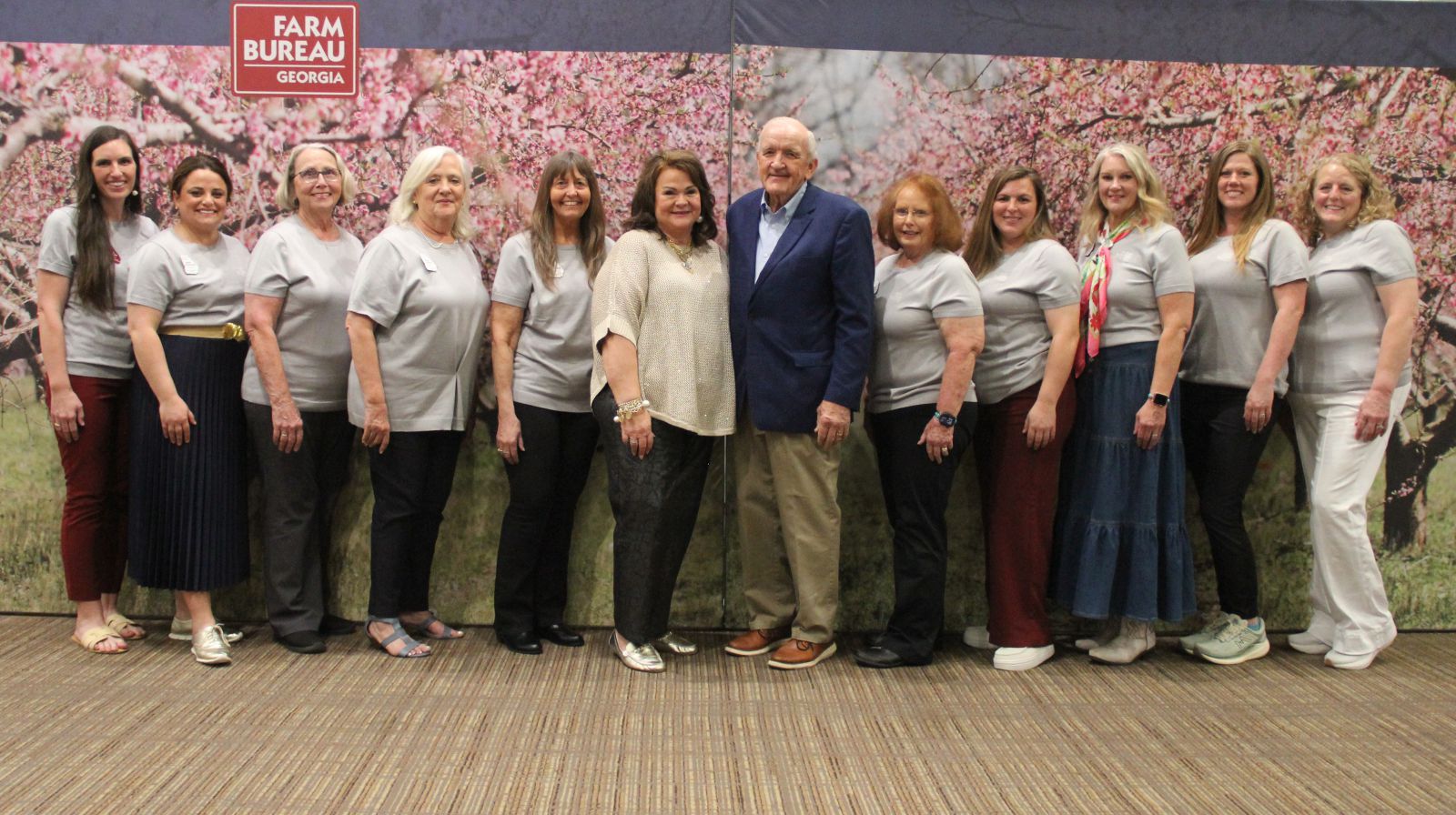
Members of the 2026 GFB Women’s Leadership Committee visit with GFB President Tom McCall & his wife, Jane, during the first day of the GFB Women in Ag Summit being held in Savannah March 19 & 20. Pictured from left are: Emilia Jackson, Floyd Co., GFB Dist.1; Vice Chairwoman Anna Strickland, Madison Co., GFB Dist. 2; Carol McQueen, Henry Co., GFB Dist. 3; Della Fowler, Greene Co., GFB Dist. 4; Chairwoman Romy Strickland, Spalding Co., GFB Dist. 5; Jane McCall, GFB President Tom McCall, Jane Wooten, Jeff Davis Co., GFB Dist. 6; Whitney Sheppard, Screven Co., GFB Dist. 7; Alicia Berry, Sumter Co., GFB Dist. 8; Michaela White, Thomas Co., GFB Dist. 9; & Melissa Williams, Berrien Co., GFB Dist. 10.
Georgia First Lady Marty Kemp delivered a message via video.
“Brian and I know the success of our farmers not only puts food on our tables, but it also strengthens our state economy. The future of this industry is bright, and women like you are at the heart of its growth and innovation. We also know that our farming families are facing unprecedented challenges. I hope that you remember it’s okay to not be okay, and that it is okay for any of us to get help when we need it. Support systems like those represented here today are essential to that resilience. So let me say thank you again for what you do, and thank you to our friends, Tom and Jane, and their leadership in making days like this possible. I hope your time here at this conference leaves you excited for the future of agriculture and the incredible women who drive it forward.”
ABAC'S Brundage shares thoughts
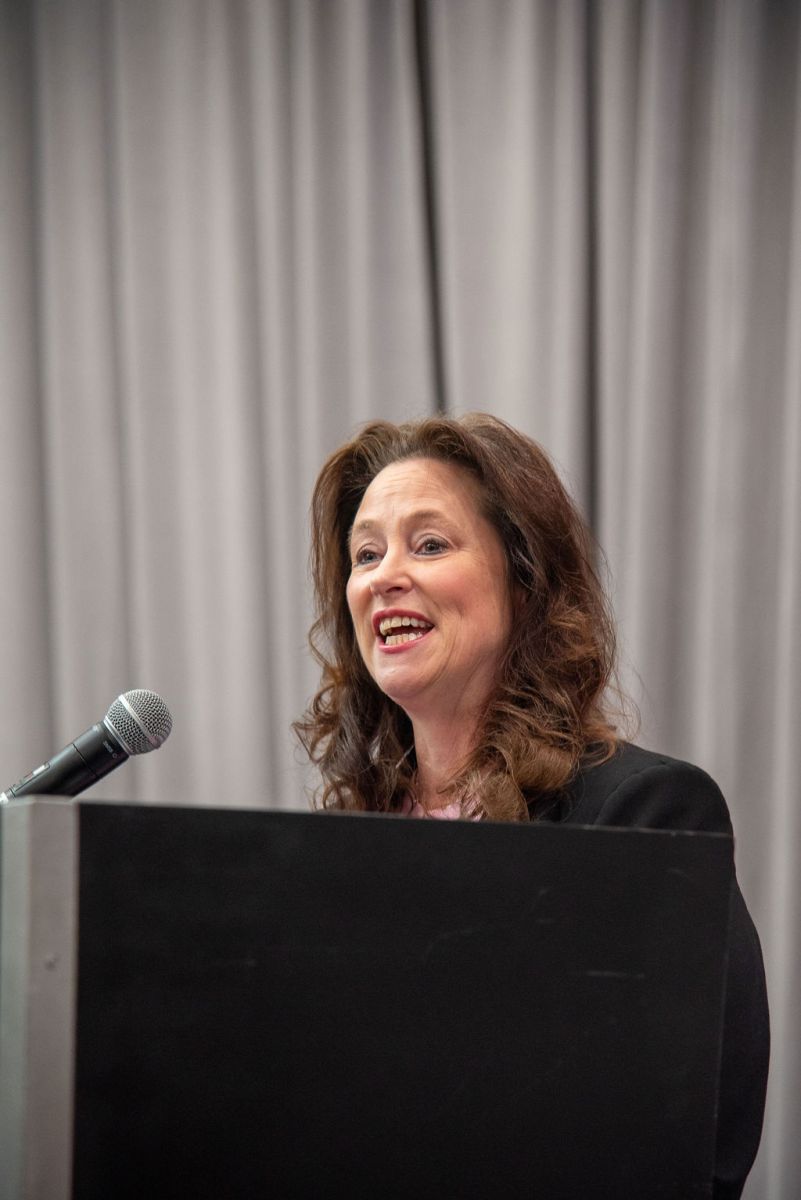
Abraham Baldwin Agricultural College President Dr. Tracy Brundage, above, delivered the keynote speech for the opening session. She said 53% of the students enrolled in ABAC’s School of Agriculture & Natural Resources are women. / Photo by Logan Thomas
“When I look around this room, I see the leaders those students will look up to. Women who are already shaping the future of agriculture. This is why our work and our courage matter so much,” Brundage said. “One of the lessons that has stayed with me comes from Dr. Brene Brown, who teaches that courage starts with showing up and letting ourselves be seen. It means stepping into rooms where your authority may be questioned. It means making decisions that not everyone will like. It may be invisible in ways that are uncomfortable, especially when you are the first, the only or the one charting new territory.” Brundage said. “Just as in agriculture, growth happens over seasons. Challenges teach us resilience, patience and leadership that lasts. Thriving is about growth in spite of setbacks. As you continue in your work, whether in business, communication, policy, production, research or any other area of agriculture, remember this. Keep showing up, keep moving forward and keep nurturing the seeds of change, because when women rise and thrive, the harvest is abundant for everyone.”
For the second year, ABAC was the presenting partner for the summit, which GFB greatly appreciates. Brundage began serving as ABAC’s 11th president on Aug. 1, 2022, and is the first female to hold the position.
Strong Farms. Strong Georgia.
GFB Chief Administrative Officer Jeffrey Harvey discussed the Strong Farms. Strong Georgia. campaign GFB is conducting to educate the public about the economic challenges farmers are facing as production costs continue to rise while crop prices decline and markets are volatile.
“If farming isn’t economically viable, we will lose our farmland. We will lose economic viability in small communities,” Harvey said. “For consumers, having economically viable farms means they will have affordable, reliable food grown in Georgia and America that they can have confidence in eating. There is no silver bullet for this problem and so we are approaching it in a number of ways.”
GFB is partnering with Mercer University and its Georgia Rural Health Innovation Center to conduct a survey to gather data on the full impact economic stress is having on farmers. Harvey said GFB will present the survey findings to state and federal legislators and to the candidates running for office this year. If you are a farmer and would like to take the survey, please register to receive a notification when it goes live at www.gfb.ag/getsurvey . For more information about the economic challenges facing Georgia Farmers and to access graphics you can use on your social media accounts to educate your friends, visit www.gfb.ag/strongfarms.
Women in Ag give back
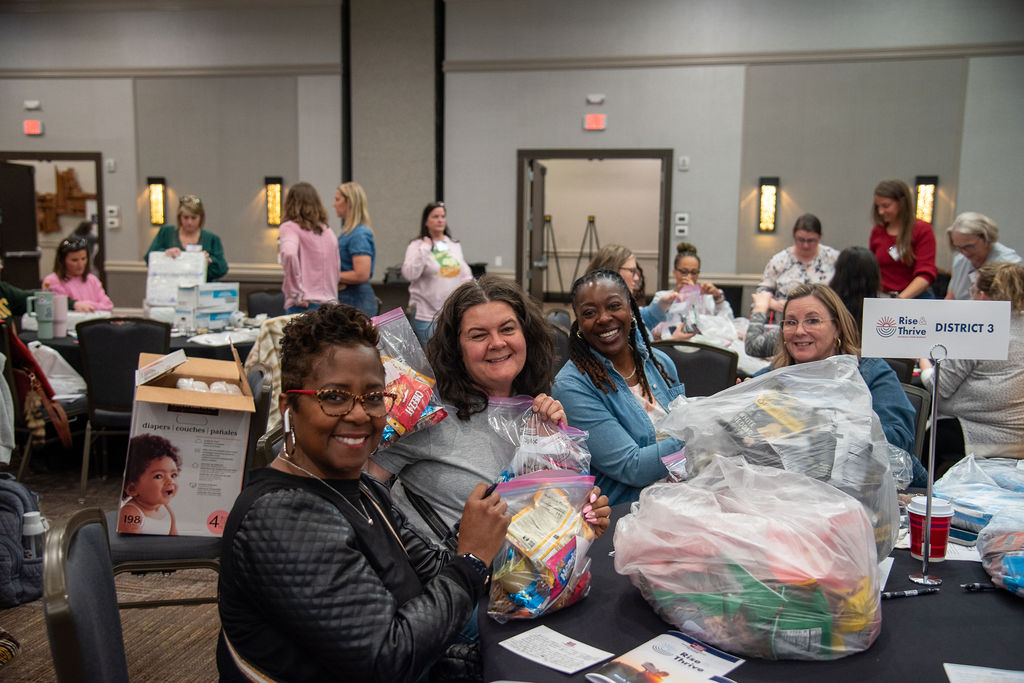
About 200 summit attendees spent the afternoon of March 19 assembling 850 snack bags for families who will stay at the Savannah Ronald McDonald House, and sorting and wrapping 16,750 diapers that will be distributed to 670 families through the Over the Moon Diaper Bank that serves 24 Georgia counties located in GFB’s 6th, 7th and 10th districts. / Photo by Logan Thomas
Living extraordinary lives
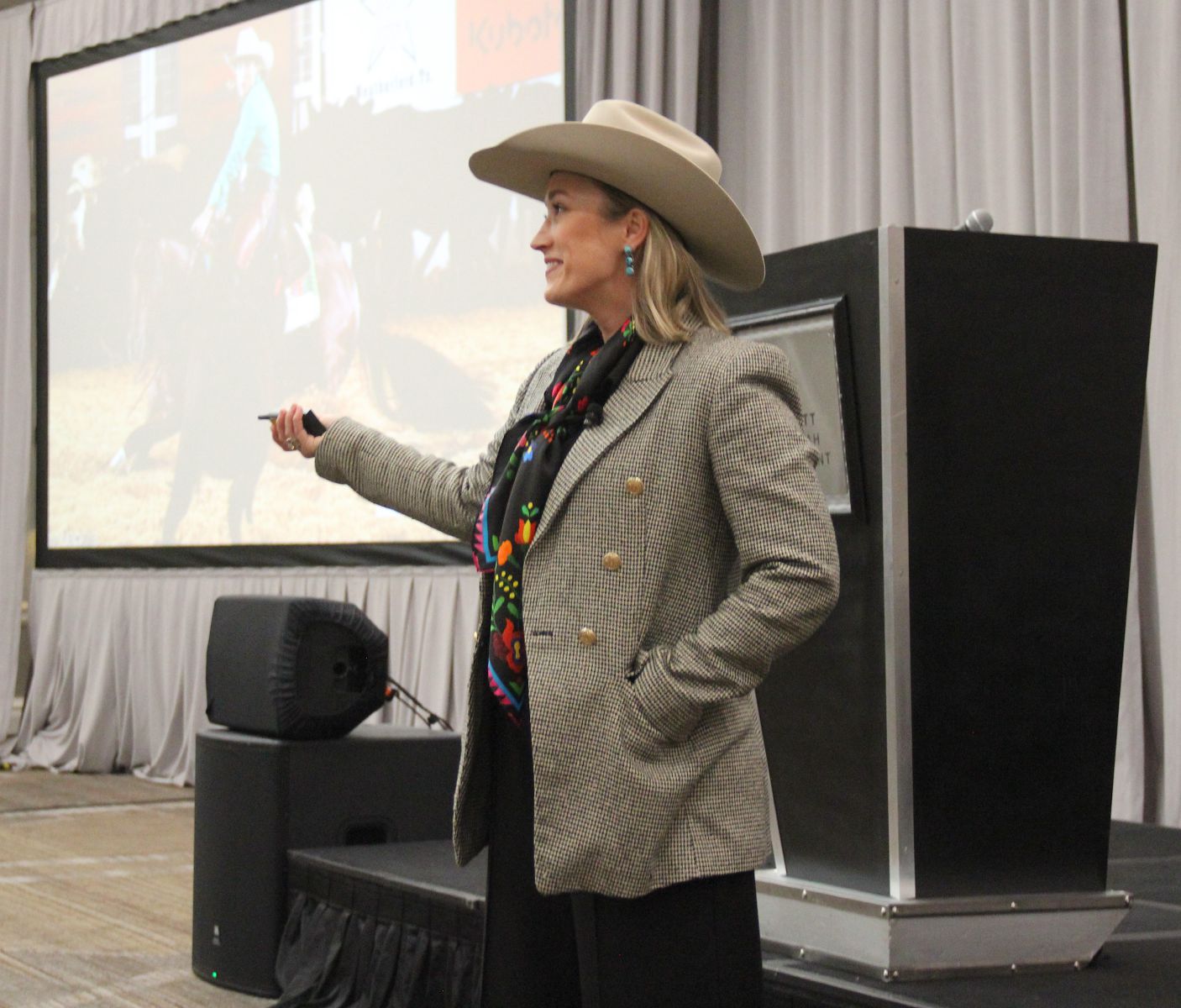
Motivational speaker Courtenay DeHoff, pictured above, shared her cowgirl code for living a legendary, extraordinary life. DeHoff was raised as the fifth generation on her family’s Kansas ranch where she grew up riding horses, tying goats in rodeo competitions and showing Angus cattle. She attended Oklahoma State University, where she received a degree in agricultural communications. After completing an internship at a TV station in Stillwater, Oklahoma, she continued to show up at the tv station to produce stories about agriculture and the station let her keep working for three years.
In order to pursue a TV career in larger markets, she was told to lose her cowboy hat and boots and put on heels and fake eyelashes.
“I got to interview big-name stars like Michael B. Jordan, Garth Brooks and Trisha Yearwood, but I would burst into tears every day on the way home from work because I wasn’t being my authentic self,” DeHoff shared. “It took me 10 years to figure out I was hiding the best part of me – the ag kid – to fit into an industry I thought I wanted to be a part of. My legendary life didn’t begin until I decided to quit tv and show up as the person I was meant to be. We need all kinds of people in agriculture.”
DeHoff shared the results of a Forbes survey that showed 900 million people worldwide feel unfulfilled.
“This tells me these people are not living a legendary life,” DeHoff said. “They’re living their life through a filter of fear and not faith. I want to inspire you not to be one of these people.”
Being a cowgirl is a mindset, not an occupation, DeHoff said. She shared the seven principles of her cowgirl code for living a legendary life.
Courage – Have the courage to show up the way you truly are.
Originality – Be who you were created to be.
Worthiness – Believe you are worthy of doing extraordinary things.
Grit.
Integrity – Agriculture is special because for most people in our industry, our integrity is what sets us apart.
Resiliency – Keep going even when you’re told no. Find another way to contribute.
Legendary
“Imagine if you don’t have the courage to show up what you might miss out on,” DeHoff said. “You also have to have the courage to not listen when people criticize you and your dreams.”
Workshops cover advocacy, leadership & AITC
AFBF Sr. Director of Media & Advocacy Training Johnna Miller provided tips to effectively use social media platforms like Facebook, X and YouTube to advocate for agriculture. She gave pointers on how to engage legislators, consumers and other decision makers with messaging from your farm.
UGA Extension Leadership Specialist Katie Chapman led a workshop where conference attendees learned the difference between facilitative leadership, in which leaders empower the team they are working with and encourage them to develop their skill sets versus traditional leadership, which tends to be more authority driven.
Stephanie Westhafer, the 2025 Georgia Farm Bureau Ag in the Classroom Teacher of the Year, shared how she uses Ag in the Classroom curriculum in her classes to teach students about agriculture while meeting curriculum standards. Westhafer is a first-grade teacher at West Jackson Elementary School in Braselton, where she has taught since 2021. She previously taught Pre-K for 10 years. Visit www.gfb.ag/westhafer25aitcteacher to learn more about Westhafer’s innovative approach to agricultural education. GFB Educational Programs Manager Caroline Leonhard discussed the free, classroom-ready agriculture resources including lesson plans, hands-on activities and more available to teachers and GFB volunteers. Visit www.gfb.ag/AITC to explore these.
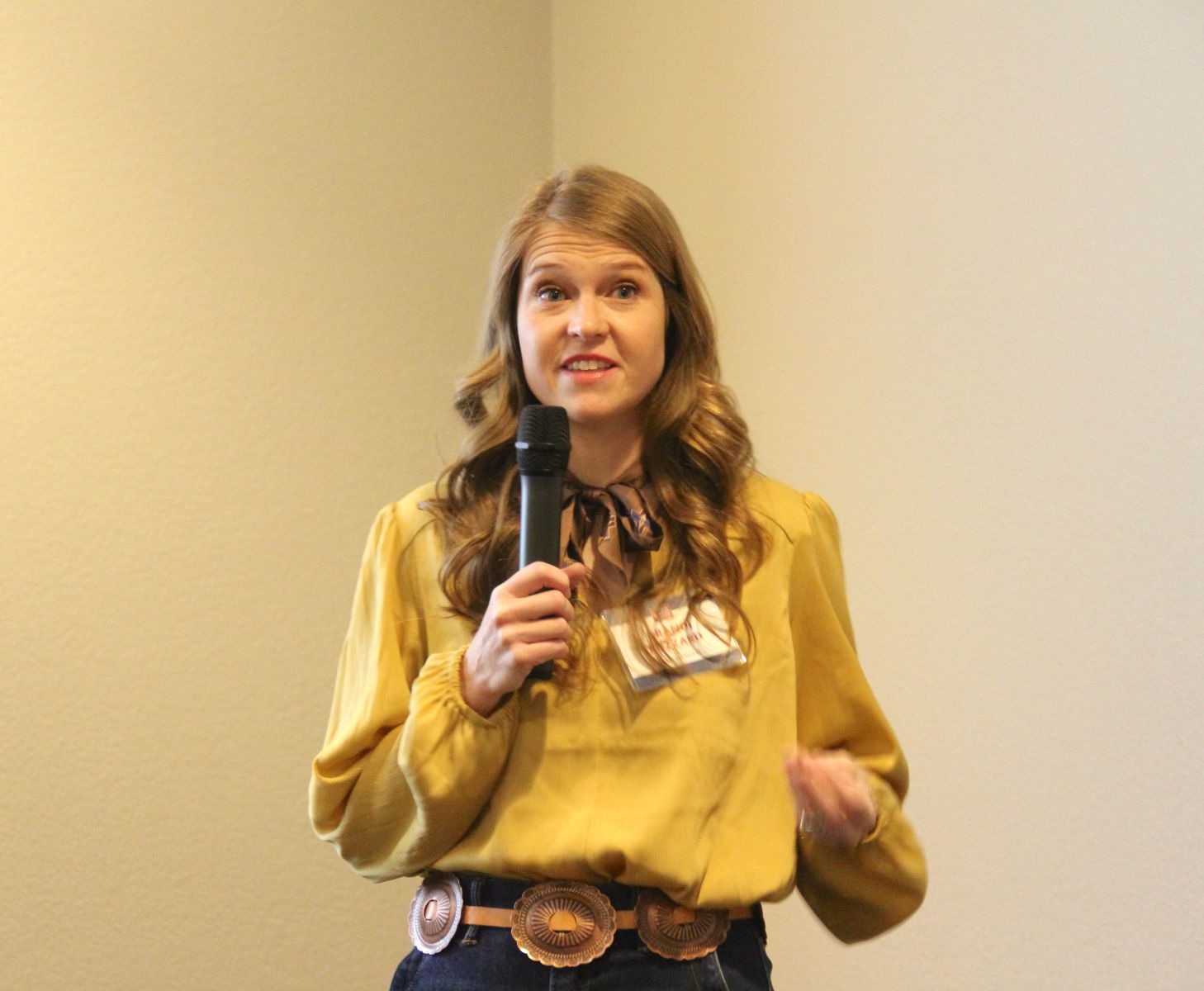
Brandi Buzzard, pictured above, a Kansas rancher and ag advocate, discussed fear-based marketing ploys food companies use to feed into consumers’ misconceptions about food, such as labeling food, like chicken, that never has antibiotics, as being antibiotic free.
- Categories:
- Tags: