Ag News
Cost of Fourth of July Cookout reflects inflation increase
Posted on Jun 24, 2026 at 14:27 PM
Families celebrating the Fourth of July holiday with a cookout will find that prices at the grocery store closely reflect inflation increases over the last year. An Independence Day cookout will cost $73.82 for 10 guests this year, according to the 2026 American Farm Bureau Federation annual marketbasket survey.
This is up $2.90 from last year, which is a 4% increase. The overall annual inflation rate in the United States is 4.2% for 12 months ending in May, which is consistent with the findings of the AFBF marketbasket survey, even though the survey tracks a much smaller list of items.
At $7.38 per person, this is the most expensive Fourth of July cookout since Farm Bureau began tracking costs in 2016. However, after adjusting for inflation, cookout costs have remained relatively stable in recent years and remain below the previous peak reached in 2022.
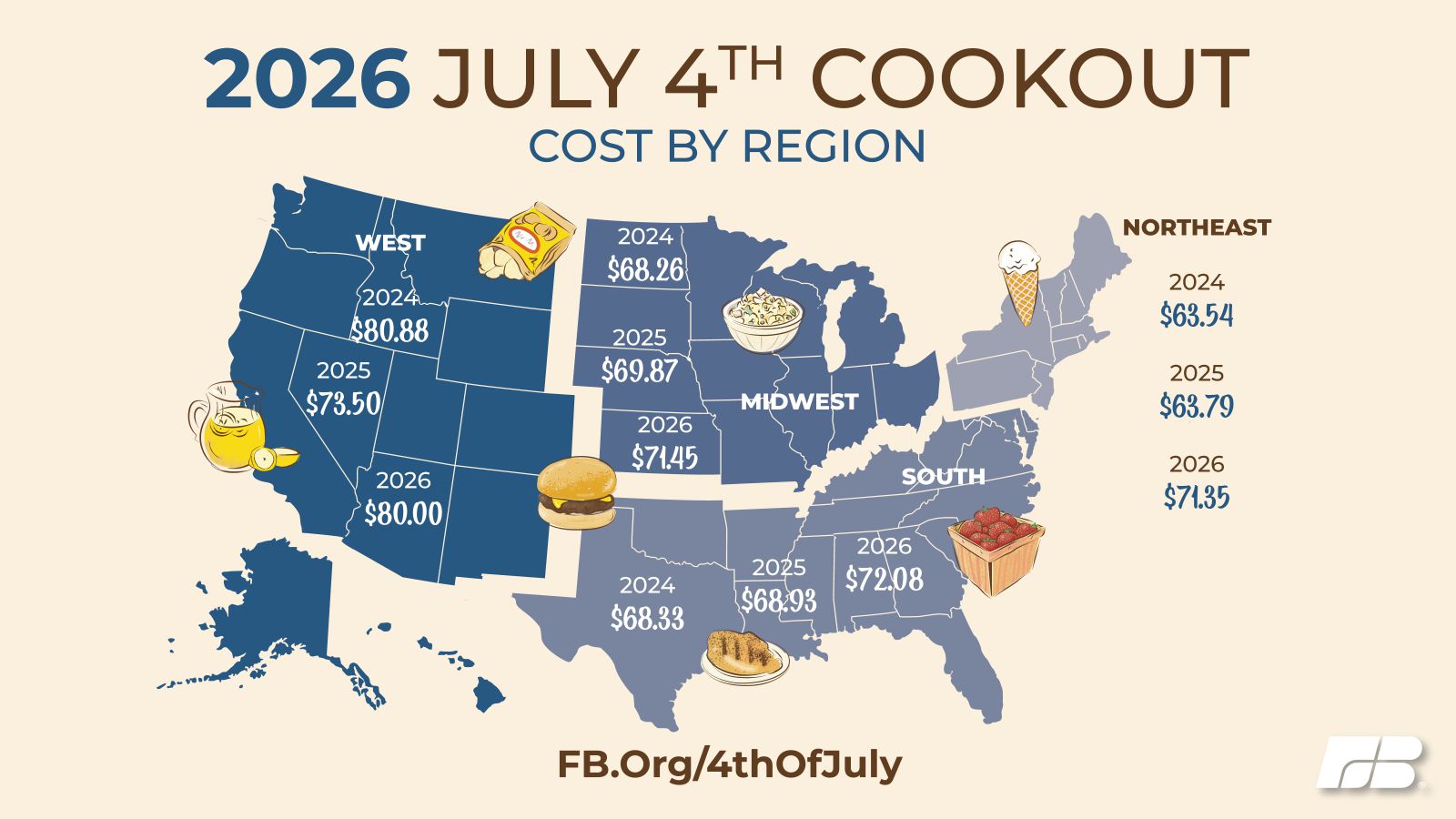
Cookout costs varied by where survey participants live in the U.S. Georgia had 19 survey participants. Their survey results show the average cost for the cookout ingredients to be 59 cents higher at $74.41 for 10 guests or $7.44 per person. The average cost of the cookout in AFBF’s Southern Region is $72.08. Shoppers in AFBF’s Western Region had an average cost of $80 for the cookout ingredients while shoppers in the Midwest paid an average of $71.45 and shoppers in the Northeast paid an average of $71.35.
“Families across the country are dealing with higher prices for many expenses including groceries,” said American Farm Bureau Federation Economist Dr. Faith Parum. “As you look at the purchasing power of the dollar, however, it has remained relatively stable when it comes to food. America’s families spend less of their disposable income on food than most other nations and we enjoy one of the most abundant, affordable and safe food supplies in the world.”
The marketbasket survey shows an increase in the cost of 10 of the 12 tracked items including ground beef, pork and beans, strawberries and hamburger buns.
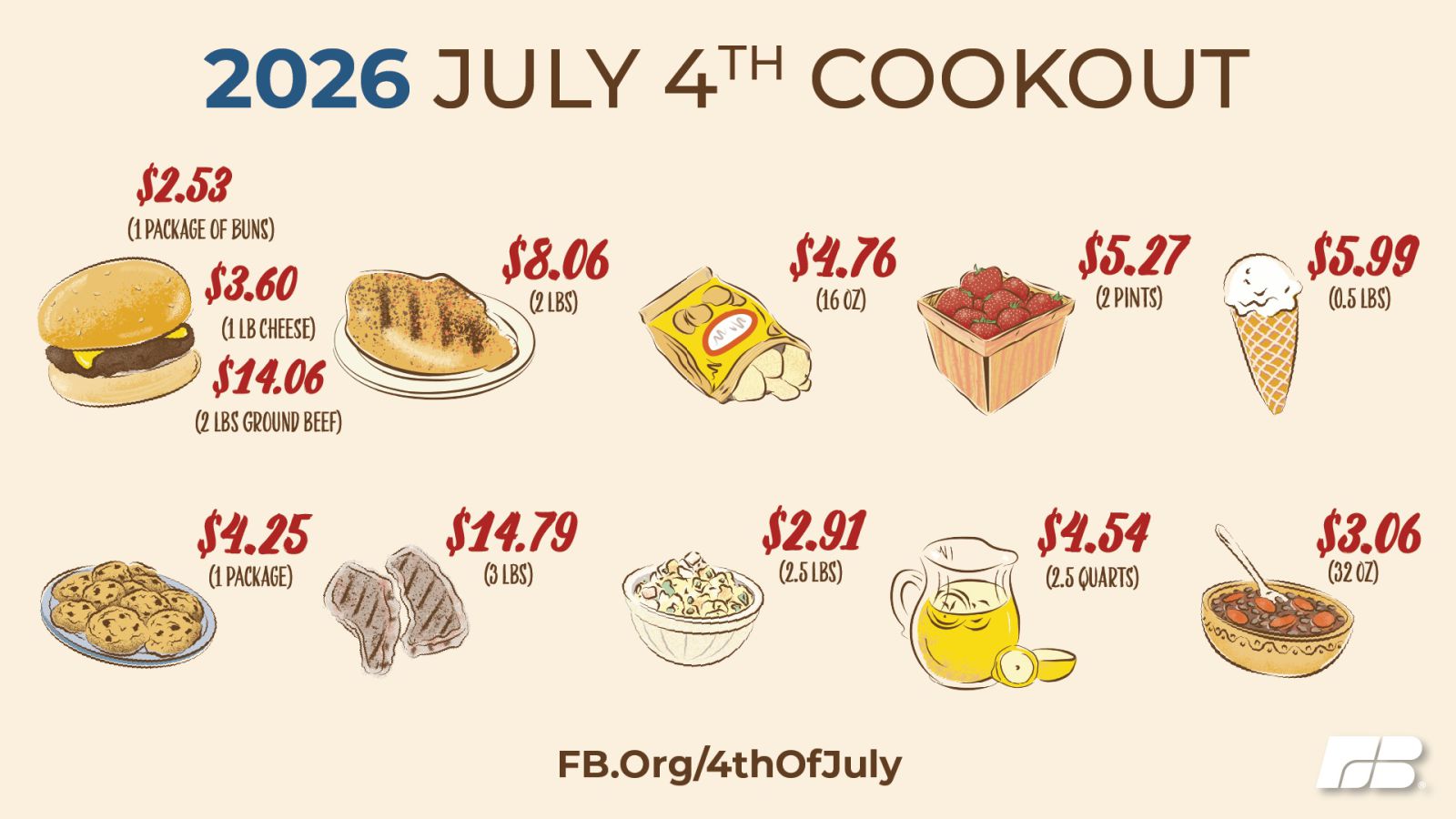
Several factors influence the increased costs. The retail price for 2 pounds of ground beef increased 5.5% to $14.06. America’s ranchers continue to rebuild their herds following years of severe drought, which has affected supplies. It will take several years for herds to recover to pre-drought levels.
Strawberries cost $5.27 for two pints, an increase of 12.4%. Strawberries had a price increase, in part, because of a devastating frost in Florida that destroyed many young plants early in the spring. High labor costs for fruits and vegetables are also a factor as well as increased costs for fuel used in refrigeration and transportation.
A 32 ounce can of pork and beans is up 37 cents from 2025 to $3.06. The cost of aluminum drastically increased this year, driving up the production cost of cans used in pork and beans.
Hamburger buns cost an average of $2.53, a 7.7% increase from last year. Increased production, transportation and labor costs contributed to the price increase of hamburger buns.
Two bright spots in the survey were potato salad and chips. The price for potato salad fell 17.8% from 2025 to $2.91. This can be attributed partially to a key salad ingredient – eggs. Egg prices have dropped as flocks recovered from avian influenza. Healthy potato harvests reduced the cost of making potato salad and chips. Chips were down 4 cents from 2025 to $4.76.
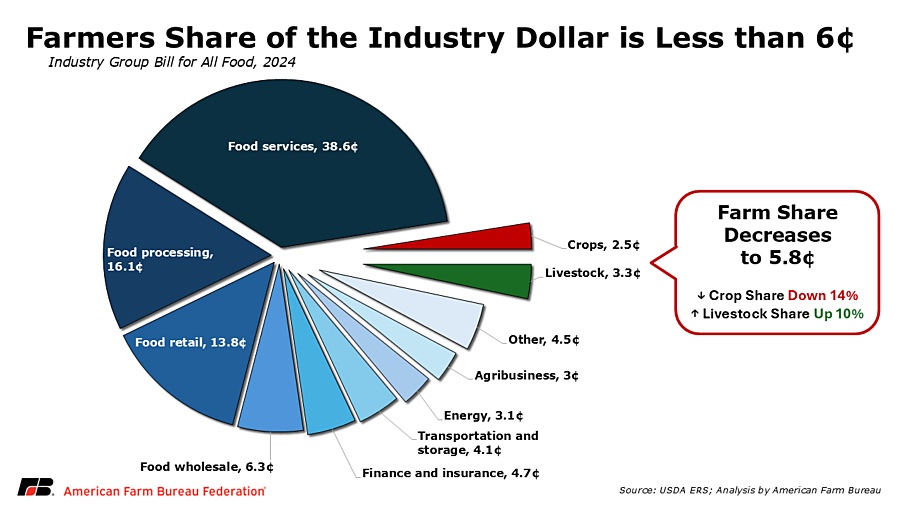
“Higher prices at the grocery store don’t always translate to more money for farmers. The farmer’s share of the food dollar is around 6% after expenses,” AFBF President Zippy Duvall said. “Farmers are dealing with natural disasters and higher supply costs while making the same - or sometimes less - money for the food they grow. Still, they’re committed to growing safe, affordable, sustainable and abundant food for our nation. Farmers represent less than 2% of the population, but they carry a great responsibility in providing nutrition for the remaining 98% of America. The critical role they play has traditionally been supported by investments in innovation, research and risk management, all made possible by the farm bill. We encourage lawmakers to celebrate America’s 250th anniversary and then return to D.C. with a renewed commitment to pass a new, modernized farm bill. It’s an investment in our country’s future.”
The federal government’s broader Consumer Price Index report for all items shows an overall increase of 4.2%, while food shows an increase of 3.1% compared to a year ago. Farm Bureau’s informal marketbasket survey examines only those foods commonly associated with summer cookouts.
The July Fourth cookout survey is part of the Farm Bureau marketbasket series, which also includes the popular annual Thanksgiving dinner cost survey of common food staples Americans use to prepare a holiday meal at home.
Volunteer shoppers across the country, including Farm Bureau members and others, collected data from stores in every state and Puerto Rico.
Individual Prices, AFBF 2026 Summer Cookout
Ingredient Avg. National Price Avg. GA Price
2 pounds of ground beef $14.06 (+5.5%) $14.97
2 lbs of chicken breasts $8.06 (+3.5%) $7.57
3 lbs. of pork chops $14.79 (+4.7%) $15.39
1 lb. of cheese $3.60 (+1.7%) $3.86
1 package of hamburger buns $2.53 (+7.7%) $2.74
2 ½ lbs. of homemade potato salad $2.91 (-17.8%) $1.56
32 ozs. of pork and beans $3.06 (+13.8%) $3.64
16-oz. bag of potato chips $4.76 (-0.8%) $5.41
13-oz. package of chocolate $4.25 (+6.3%) $4.13
chip cookies
½ gal. of ice cream $5.99 (+5.3%) $5.84
2 pts. of strawberries $5.27 (+12.4%) $4.75
2 ½ qts. of lemonade $4.54 (+3.9%) $4.55
The Farmer’s Share
Higher grocery prices do not mean higher profits for farmers and ranchers. After expenses, farmers receive less than 6 cents of every food dollar according to USDA Economic Research Service data. Most of what consumers pay at the grocery store reflects costs that come after the farm gate, including processing, packaging, transportation, marketing and retail.
At the same time, the farmer's cost of production continues to climb. Farmers and ranchers are paying more for labor, fuel, fertilizer, equipment, land, repairs and other inputs, while many commodity prices remain below recent highs. Those pressures make it harder for farms to absorb weather disasters, animal disease, supply chain disruptions and market volatility.
Even in a challenging farm economy, farmers and ranchers remain committed to producing a safe, affordable and abundant food supply. But keeping that food supply strong will require support and stability.
That commitment is especially important as the U.S. celebrates 250 years of independence and looks toward the future. A strong, modernized, five-year farm bill will help provide the support, stability, research investment and risk management tools farmers and ranchers need to keep America’s food supply strong.
Read the full Market Intel on the 2026 Fourth of July Cookout Survey here.
- Categories:
- Tags: