Ag News
Forage producers urged to prepare for pasture mealybug
Posted on Aug 05, 2026 at 11:08 AM
Though no cases of pasture mealybug infestations have been confirmed in Georgia, UGA State Forage Extension Specialist Dr. Lisa Baxter is recommending the state’s forage producers check their pastures and hayfields frequently for the emerging pest, which was first officially reported in Texas in 2025 and has since been found in Florida.
Baxter offered the following information and resources through the UGA Forage Extension Team website:
Pasture adults are less than 1/4 inch long, white and oval. They are covered in a waxy coating and will have fine hairs across their body. They primarily impact annual and perennial warm season grass species. The damage consists of yellowing, stunted growth, and early cellular aging.
For more information about the pasture mealybug and how it has impacted forage production in Texas, please review the recently revised Texas A&M Extension bulletin on pasture mealybug.
Reporting in Georgia
As of Aug. 3, this pest has not yet been officially reported in Georgia. Baxter encourages farmers to walk their pastures and hayfields often to check for the pest. If you suspect you have the pasture mealybug, please work with your local County Extension Agent for confirmation or fill out the UGA pasture mealybug survey. An updated map will be released weekly on the Georgia Forage Website and Georgia Forages Facebook Page once the pest has been confirmed.
Suppression Options
Baxter wrote on Aug. 3 that there are no labelled and reliable insecticides for complete control of the pasture mealybug. Efforts are being made by chemical companies to have emergency labelling approved for some active ingredients, but this takes time and the agronomic and economic benefits have not yet been determined. The only product currently holding an emergency use label in Georgia is Sefina (suppression only).
“Practicing good farm biosecurity is critical to stopping this pest at the gate. This is the best and most reliable option available right now,” Baxter wrote. “These pests can stick everywhere, so producers need to think strategically and be vigilant. Sources of introduction include farm equipment, hay and stored forages, grazing animals, clothing, shoes, wildlife, and wind.”
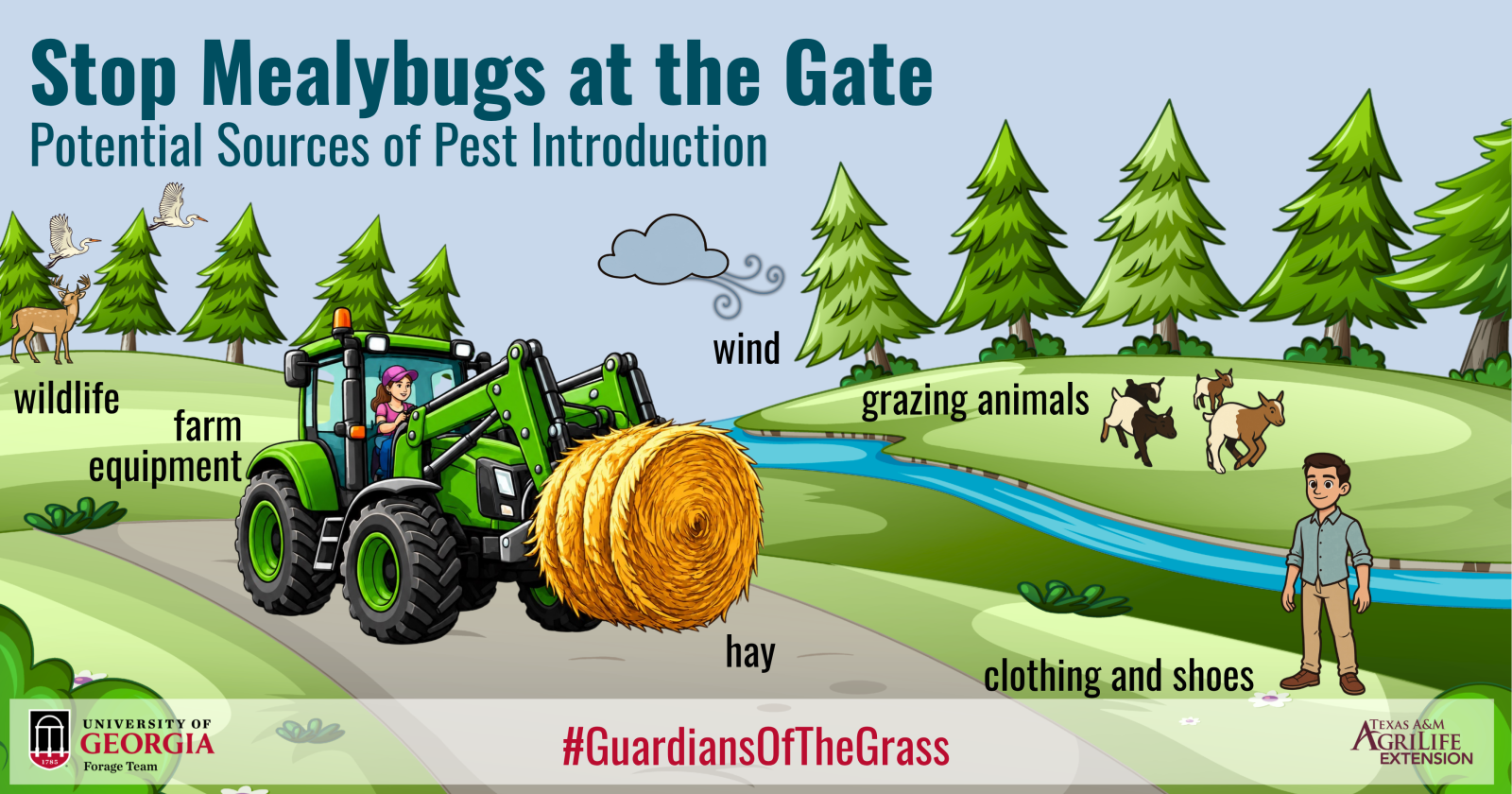
Graphic courtesy of UGA Extension Forages Team and Texas A&M Agrilife Extension
Biosecurity practices may include:
Cleaning farm and hay equipment in between each field or farm (depending on scale of operation).
Avoid driving through pastures.
Change pants and shoes in between fields or farms (depending on scale of operation).
Keep grazing records and avoid impacted pastures.
Limit wildlife movement on farm.
Limit vehicle traffic in and off the farm.
For more information about building biosecurity plans in forage systems, please contact your local Extension office.
- Categories:
- Tags: