Ag News
GFB Policy Development Committee considers issue stances
Posted on Nov 04, 2026 at 14:25 PM
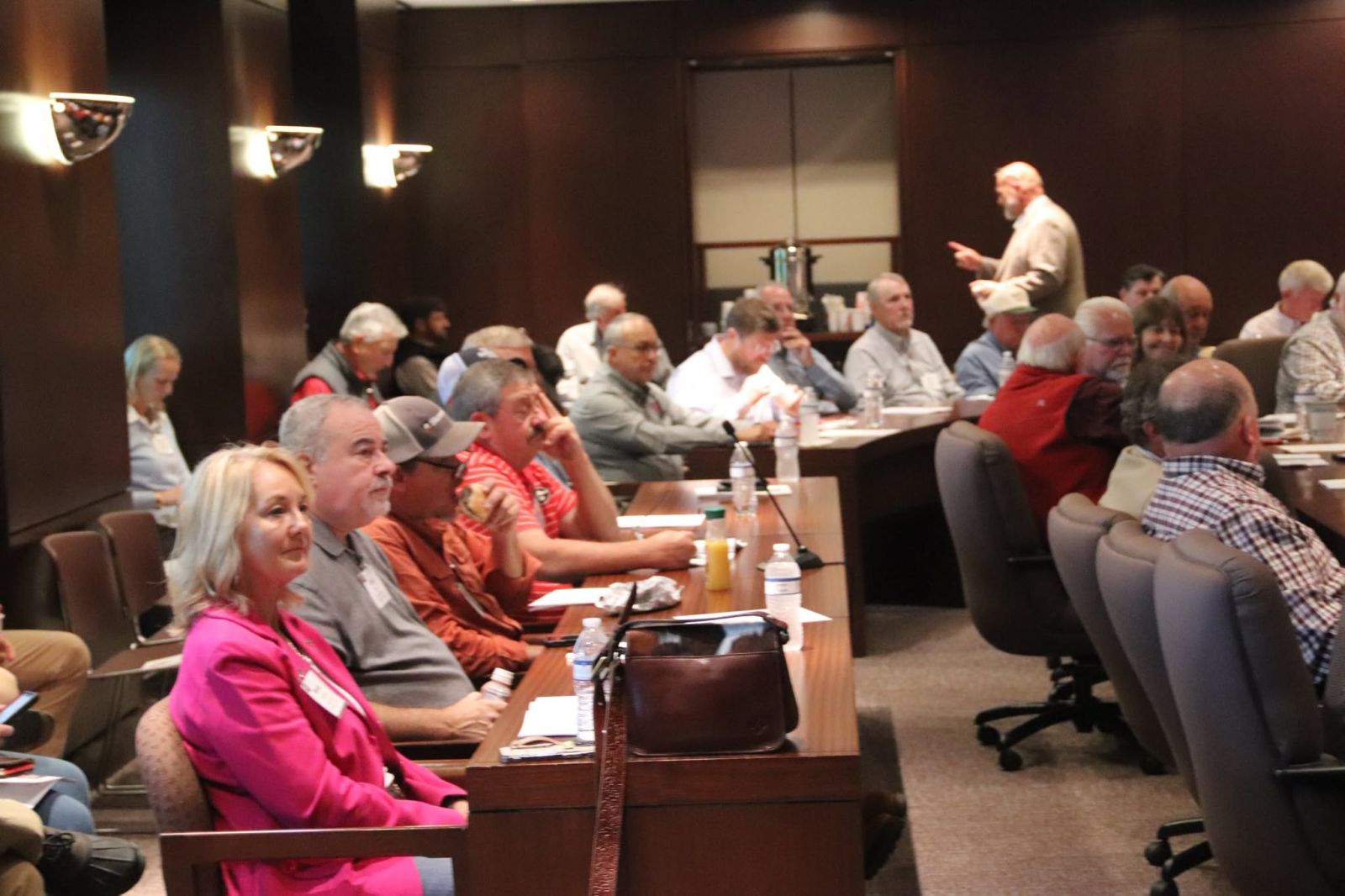
On Nov. 2, the Georgia Farm Bureau (GFB) Policy Development (PD) Committee reviewed proposed changes to the organization’s position on a variety of issues affecting agriculture, fine-tuning recommendations to be presented to voting delegates at the GFB Convention to be held Dec. 6-8 on Jekyll Island. / Photo by Jay Stone
GFB’s PD Committee consists of three county Farm Bureau presidents from each of GFB’s 10 districts, the chairman of GFB’s 20 advisory committees, GFB members serving on AFBF Issue Advisory Committees and the GFB Directors. County presidents from each district are selected on a rotating basis annually to ensure fair representation.
Policy proposals originate from county Farm Bureaus or GFB’s Commodity Advisory Committees (CACs). Policy changes were submitted by more than 50 counties and 18 CACs.
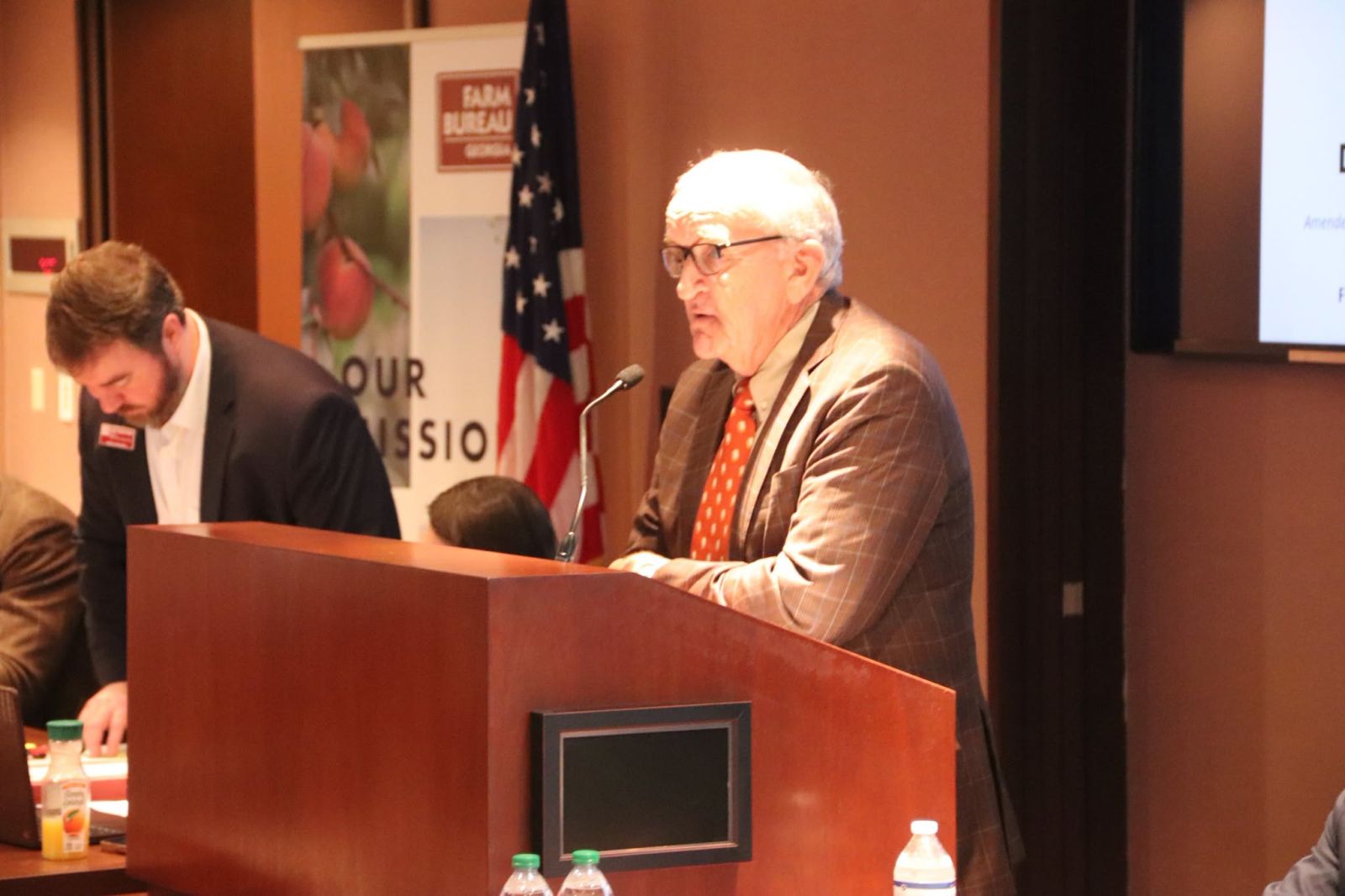
“Thank y’all for taking the time to come here today and do what Farm Bureau is all about – getting grassroots input from our farmer members to write GFB’s policy book, which determines the position our organization will take on issues affecting agriculture when our staff and leaders represent farmers in Atlanta and in Washington, D.C., next year,” GFB President Tom McCall said. “We appreciate all of our county Farm Bureaus and our advisory committees that sent in policy for the committee to consider today. The committee will meet again on Dec. 6 during our convention to review the proposed policy one more time before all GFB voting delegates have the chance to discuss and vote on the policy on Dec. 8.” / Photo by Jay Stone
McCall said a PDF (electronic document) of the policy the committee approved Nov. 2 will be sent to all county Farm Bureau office managers before convention so that voting delegates can review the proposed changes before the convention. The pdf can be printed at the county office.
The committee considered more than 150 policy proposals submissions. Key topics submitted policy pertained to included taxes and the Conservation Use Value Assessment, ag labor, eminent domain, federal farm programs and natural disaster programs, livestock imports, trade, and most of Georgia’s major commodities such as poultry, cotton, peanuts, pecans, specialty crops and timber.
Protecting U.S. cattle herd from NWS
Among the issues in the meeting was a proposal, submitted by the GFB Beef Committee, to oppose the USDA decision to open U.S. markets to cattle from countries with confirmed cases of New World Screwworm (NWS).
The thought behind the proposal was to protect U.S. livestock producers and their herds from the spread of NWS, which can be devastating to cattle and could affect the nation’s beef supply.
“We’ve got to regulate cattle coming in. We’ve always had cattle coming across the border, and I don't think it'll ever end, but we've just got to make sure that what comes across is safe and it's healthy,” PD Committee member and GFB 1st District Director Bill Bryan said. “Everybody may not agree on the same thing, but the majority is where the policy comes from. At the end of the day, I think that we're all on the same page.”
The USDA closed the border to cattle imports from Mexico in May 2025. Then in early June, NWS was detected in Texas livestock and has since been detected in New Mexico and Arizona. Since the end of July, the USDA has been implementing a phased reopening of the U.S. southern border ports for cattle imports from Mexico. To date, USDA has reopened the following ports: Douglas, AZ: Aug. 24; Santa Teresa, NM: Sept. 24; & Columbus, NM: Oct. 26. A border port in Nogales, AZ was planned to reopen Nov. 30 but may be affected by recent detection of NWS in Arizona.
USDA has indicated it will continue to assess conditions at additional ports of entry and will make further reopening decisions based on animal health risks, operational readiness, and the continued effectiveness of mitigation measures.
Proposed policy addresses agriculture’s need for year-round labor
Poultry and dairy producers have long voiced the need for reliable ag workers year-round rather than just for multiple months as the H-2A program currently provides. The GFB Poultry Advisory Committee submitted policy supporting that poultry growers be eligible for year-round H-2A labor under the Immigration and Nationality Act. At the suggestion of dairy producers, the submitted policy was amended to say agricultural producers to cover more types of farmers that need year-round workers.
“With the way the H-2A labor program is now, it’s set up for either a nine or a 10-month contract while poultry production goes on year-round. With the new push in Washington to update the H-2A labor law, the Poultry Committee felt like this could be a good time to get a provision included that would allow a year-round contract for poultry producers because labor is just getting harder and harder to find on the farm,” explained GFB Poultry Committee Chairman Bobby Barber. “Our committee members felt like dairy and maybe producers of some other commodities might want to come on board with supporting a year-round contract, so when the committee moved to change the wording to include all agricultural producers, we didn’t have a problem with that.”
Poultry producers request notification of avian flu cases
With Georgia being a leading producer of chickens and eggs, poultry and egg producers stay on high alert for potential future cases of avian influenza. While growers follow biosecurity precautions year-round to protect their flocks, members of the GFB Poultry Committee submitted policy recommending that the Georgia Department of Agriculture create a text alert system to which poultry growers can voluntarily signup to receive notification of new confirmed positive cases in Georgia and in bordering counties in neighboring states.
“With all of the cases of avian influenza that have occurred in the U.S. in the last couple of years, members of GFB’s Poultry Committee thought it would be helpful if we had a voluntary, opt-in text alert system through the Georgia Department of Agriculture that would notify poultry producers in the county where a confirmed case is diagnosed and producers in neighboring counties,” Poultry Advisory Committee Chairman Bobby Barber said. “We take biosecurity precautions at our farms, but if a producer knew there was a confirmed case of avian flu near your area at a given time, we would know to step up our precautions.”
Barber said the committee doesn’t want the name nor address of the farm with a confirmed case of avian flu to be provided – just the county where the farm is located.
Barber, who has been an active GFB member for more than 32 years, says he appreciates the grassroots approach Farm Bureau takes in letting its members influence the organization’s policy.
“Every policy in this book started in a county Farm Bureau boardroom, made it out of the county into the proposed policy book that the state policy development committee considered today and if it was approved, now it will go on to be considered by the voting delegates during our convention on Jekyll Island,” Barber said. “Farm Bureau’s final policy is a roadmap of what we as Georgia producers think agriculture in Georgia and America needs.”
Specialty crop producers recommend being included in Title I farm programs
The GFB Environmental Horticulture Committee (EHC) proposed policy that was approved by the state policy committee that recommends specialty crops be added to Title I crops in future farm bills as well as USDA disaster relief, federal labor and OHSA heat legislation.
“Right now, we're not included in those federal programs automatically, and we felt that it was important to be put into those categories so that we have equal representation and so specialty crops are treated the same as other agricultural commodities,” said GFB EHC Chairman Will Ross.
While the USDA has provided compensation to specialty crop growers for crop losses through recent programs, because specialty crops are not a Title I crop in the farm bill, program details and the payments have come later than row crops.
“Farm Bureau’s policy process gives all of the agricultural commodities in Georgia a chance to express their concerns about the commodities they are familiar with,” Ross said.
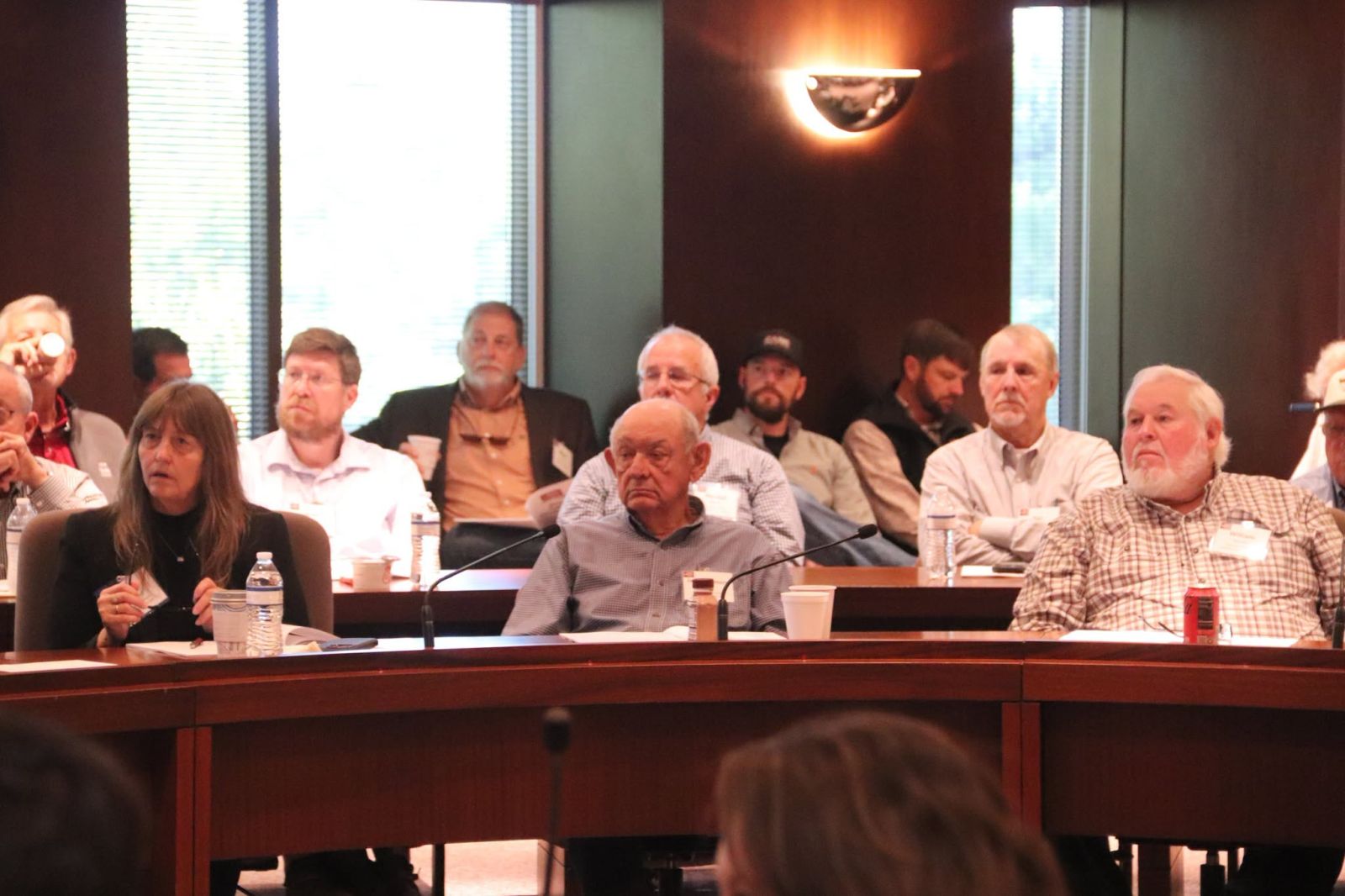
Members of the GFB Policy Development Committee listen to discussion during the Nov. 2 meeting in Macon. / Photo by Jay Stone
- Categories:
- Tags: