Ag News
Pasture Mealybug detected in Decatur County; farmers urged to be on lookout for pest that spreads quickly
Posted on Aug 28, 2026 at 10:32 AM
Georgia has its first confirmed case of pasture mealybug (Heliococcus summervillei) in Decatur County in the state's Southwest corner on the Florida line. Pasture mealybug (PMB) was found in late July on weeds and grass at a Decatur County turfgrass farm, the Georgia Department of Agriculture (GDA) announced Aug. 28. The pest was first officially declared to be in the U.S. in Texas last October.
“Pasture mealybug is a serious threat to Georgia agriculture, and we’re asking Georgia farmers and producers to stay vigilant in order to protect their operations,” said Georgia Agriculture Commissioner Tyler J. Harper via a press release. “This pest can spread quickly and kill grass, potentially causing significant losses for our farmers and making biosecurity more important than ever. I encourage everyone to walk their pastures and hayfields often to check for the pest. If you suspect you have the pasture mealybug, please contact your local County Extension Agent immediately.”
According to the release issued by the GDA, the U.S. Department of Agriculture (USDA) on Aug. 5, confirmed the detection that was reported to the GDA’s Plant Protection Division (PPD) on July 27 by its University of Georgia entomology partners at a turf grass farm in Decatur County. Upon notification, GDA PPD immediately submitted samples to its partners at the USDA's Systematic Entomology Laboratory for further testing and confirmation.
PMB was first officially reported in Texas in October 2025 and as of Aug. 14, was in 70 Texas counties, according to Texas A&M. It was also detected in Louisiana sugarcane fields last fall and as of July 24 had been detected in 14 of the state's parishes where it is threatening sugarcane production.
It was first detected in Florida's St. Lucie County in May 2026, where it infested fields of limpograss, according to the Florida Department of Agriculture & Consumer Services (FDACS). Surveys have confirmed the pest to be in the following Florida counties: Brevard, Broward, Charlotte, Collier, DeSoto, Glades, Hardee, Hendry, Highlands, Indian River, Jackson, Lake, Lee, Manatee, Martin, Miami-Dade, Okeechobee, Orange, Osceola, Palm Beach, Polk, St. Lucie, Sarasota and Seminole. Florida's Jackson County borders Georgia's Seminole County.
Signs of Pasture Mealybug
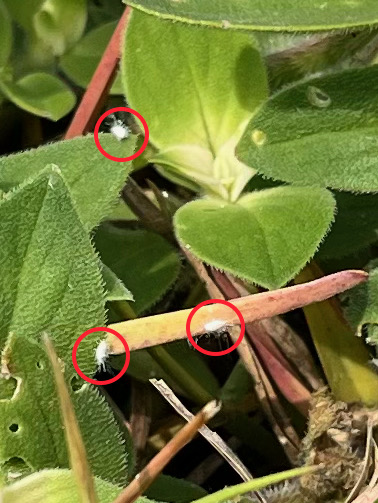
Pasture mealybug was found on weeds and grass at a turfgrass business in Decatur County, Georgia, in late July and has been confirmed by the USDA. / Photos courtesy of the Georgia Department of Agriculture.
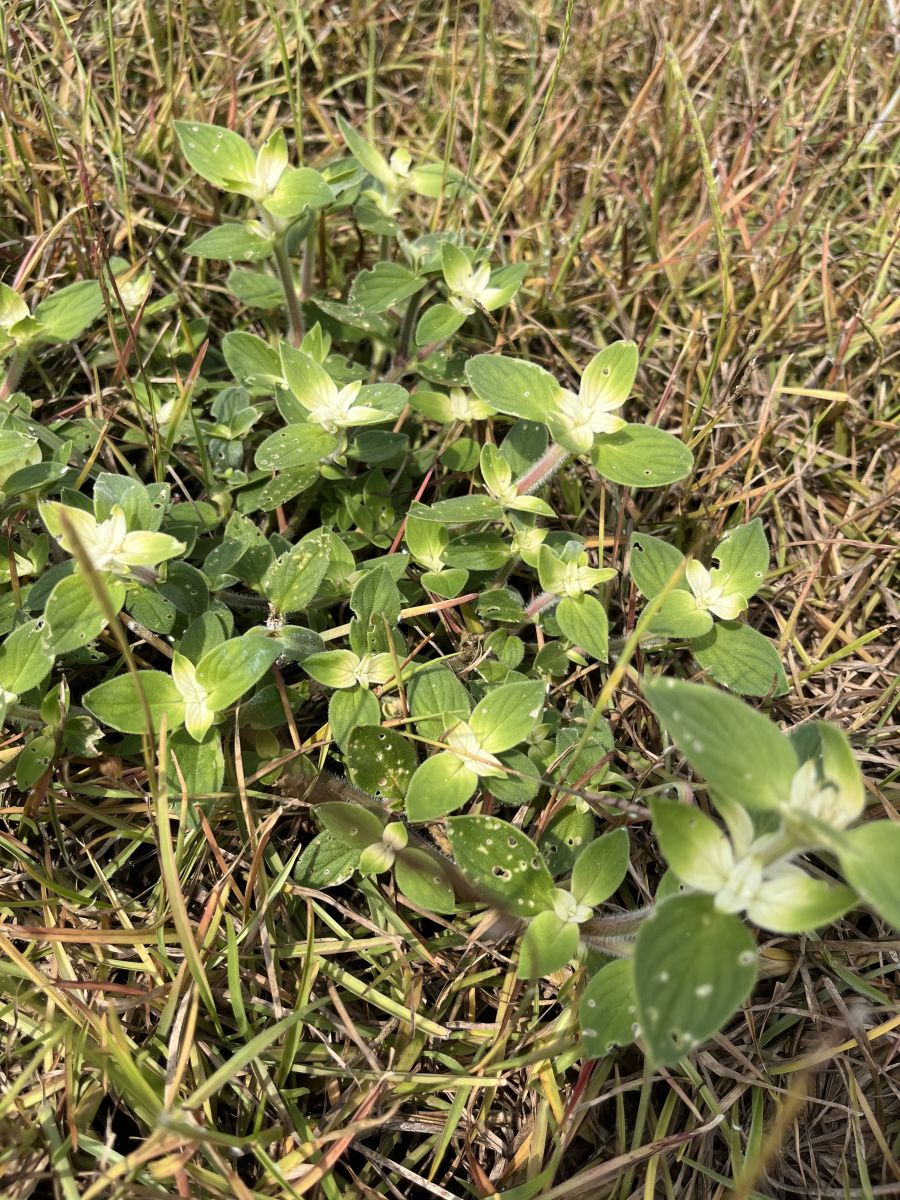
Pasture mealybug damages grass by feeding on plant sap and injecting toxic saliva into the plant. Symptoms can appear within a week of infestation and may include yellowing leaves that progress to purple or red discoloration; stunted growth and drought-like stress even after rainfall; poorly developed roots; dieback beginning at the tips of older leaves; and premature senescence and plant death.
Biosecurity Measures
Because pasture mealybug can spread through equipment, clothing, vehicles, and other materials, preventing its movement between fields and farms is critical. Farmers are encouraged to follow these biosecurity practices:
Clean farm and hay equipment between fields or farms, as appropriate for your operation.
Avoid driving through pastures whenever possible.
Change clothing and footwear between fields or farms.
Keep grazing records and avoid moving livestock into or through affected pastures.
Limit wildlife movement through pastures when possible.
Limit vehicle traffic on and off the farm.
"This pest is unlike anything else we have dealt with in the region. It has the potential to be incredibly detrimental to grass based agriculture," UGA Extension State Forage Specialist Dr. Lisa Baxter wrote in an email she sent out to Extension agents on Aug. 28. "There is a lot we still don’t know, but rest assured that our team is doing what we can to learn more and keep everyone informed as the situation develops."
What we know about Pasture Mealybug (PMB) & may expect
This Q&A was provided by Dr. Lisa Baxter.
Q: What crops could be impacted?
A: All warm season grasses could potentially be impacted. This may potentially include all pasture, hay, cover crops, turfgrasses, corn, sugar cane, and other small grains.
Q: Can I spray something to keep the PMB out?
A: Unfortunately, no. There are no reliable pesticides to prevent or control the PMB. Currently, Sefina Inscalis is labeled for suppression but results are mixed. Biosecurity is the best option we have right now.
Q: Where can I report?
A: Extension agents can report directly to Dr. Lisa Baxter. Producers can fill out the PMB survey so we can put them in contact with their local Extension Agent.
Q: Should I be worried?
A: No, but we should be scouting and taking proactive measures to keep ours farm safe. Biosecurity is the best option we have right now to slow the spread of the PMB.
.png)
Graphic courtesy of UGA Extension Forages Team and Texas A&M Agrilife Extension
What to do if you suspect you have MPB on your farm
If you suspect pasture mealybug on your property, contact your local County Extension Agent for assistance with identification and confirmation. Farmers are also encouraged to complete the Suspected Cases of Pasture Mealybug (PMB) Survey to help the University of Georgia identify, monitor, and track potential cases across the state.
The University of Georgia Extension Forages Team has created a PMB webpage with the educational resources and the most current map to help track confirmed pasture mealybug detections across the state. The map will be updated as new cases are identified and confirmed, providing the public with the latest information on the pest’s presence in Georgia.
PMB origins
Pasture Mealybug is not native to the United States and is a newly recorded species here, Texas A&M reports. Although it was first officially identified in the U.S. last fall, researchers suspect that the insect may have been introduced before 2022. This pest was first described in Australia in 1928, and the first detection of this species in the Western Hemisphere occurred in the Caribbean between 2019 and 2020.
Identifying PMBs
According to Texas A&M reports, adult female pasture mealybugs are 2 to 5 millimeters (mm) long and oval with a posterior, short anal tube. The insect body is usually covered with a waxy coat, giving it a white or “mealy” appearance. Older pasture mealybugs have fine hair, about the length of the width of their bodies. These extend out to all sides. The youngest nymphs are very small (less than 1 mm in length) and can only be seen with a magnifier. They might be found at the base of the plant and roots on feeding sites.
Nymphs are the damaging stage of the pest. The adults do not feed. The PMB is mobile in all life stages and might be found at or below the soil surface or under dried cow patties. PMBs may be found either in larger groups or individually on leaves.
PMBs reproduce sexually, with both males and females passing through four developmental stages. Males pupate after the third phase and emerge as winged adults, which are most abundant during the peak summer breeding season. Mating tends to occur in the dense thatch layer of summer pastures.
The bodies of mature, mated females turn pink in color. Females can produce nearly 100 offspring within 24 hours. Under laboratory conditions, the average life cycle of females is 45 to 47 days, though some may live up to 100 days. Males have a shorter life cycle of 29 to 33 days.
Females can persist in the field year-long by overwintering in the soil, where they survive under dry and/or cold temperatures. The PMB undergoes seasonal variations in intensity or population increases, depending on the weather and pasture management.
According to a Texas A&M fact sheet, high humidity, high temperatures, and rain events over the growing season are favorable conditions for the pest to increase in population size and damage potential.
Visit https://gfb.ag/txampmbdoc to read the Texas A&M Extension PMB factsheet in its entirety.
- Categories:
- Tags: