Ag News
Sunbelt Expo celebrates everything good about agriculture
Posted on Oct 22, 2026 at 16:36 PM
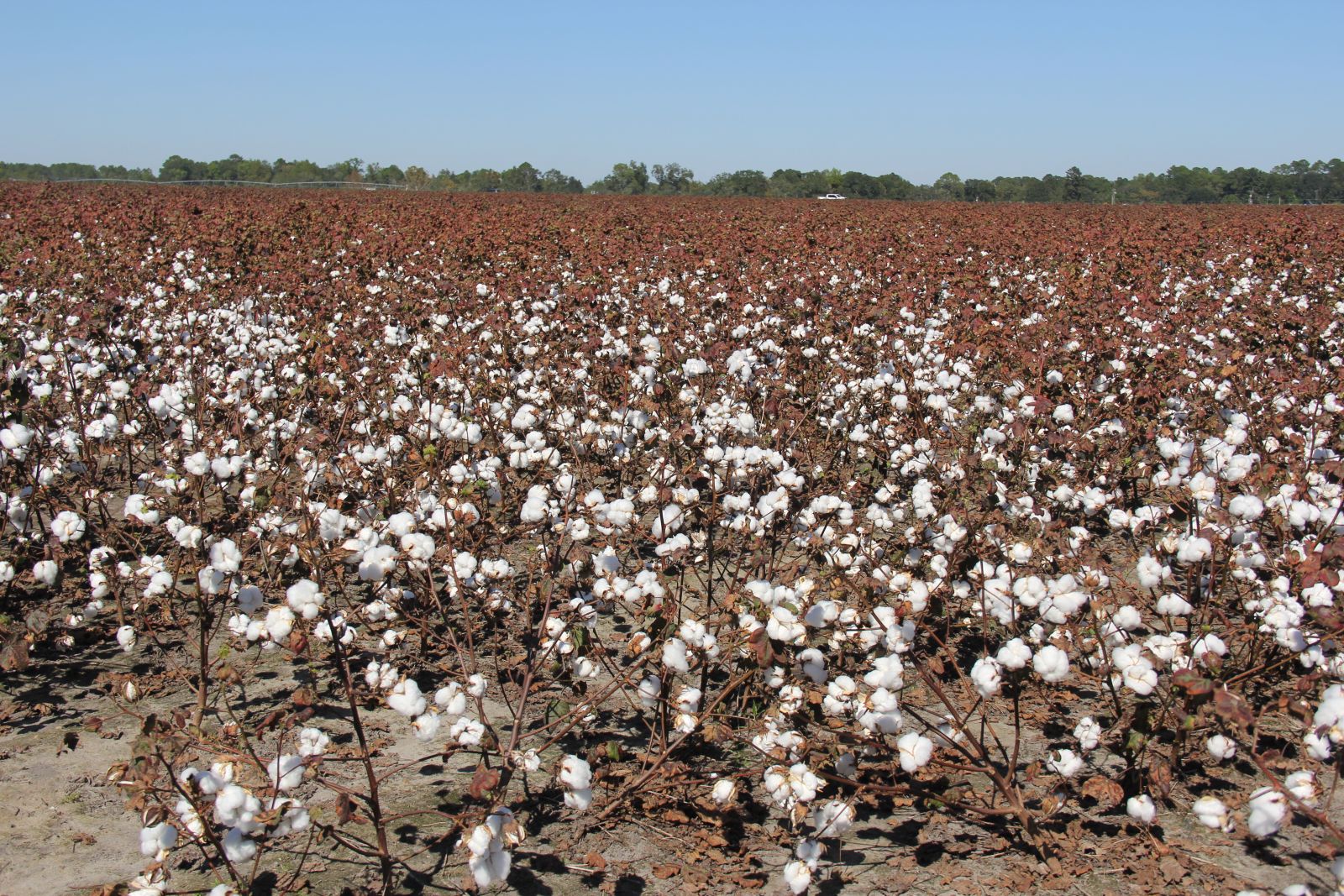 For three days, Oct. 20-22, members of the Southeastern agriculture community came together at the 48th Annual Sunbelt Ag Expo where all the positives of farming and living in rural communities was showcased. The weather was picture perfect with cool, crisp mornings that warmed up to pleasant afternoons with cool breezes.
“Thanks to our exhibitors, farmers and attendees for being here to support us this week,” Sunbelt Ag Expo Executive Director Chip Blalock said during the show’s opening ceremony on Oct. 20. “There's lots to see and do, whether it's demos in the fields, including the autonomous tractor technology, hay harvesting or spray drones. In the livestock section, we’ve got a lot going on. We also have Georgia Grown products featured in the Family Living Building and the Flint River Fresh Backyard Garden. We have three ATV test tracks. There’s lots of technology throughout the grounds for you to see and experience.”
Guests from across the Southeast traveled to Moultrie, Ga., for the must-attend event where the latest in ag technology and production agriculture was displayed on 93 acres by 800 vendors representing more than 4,000 different product lines. Hay cutting, raking and baling demonstrations occurred each day at Expo’s Darrell Williams Research Farm along with peanut harvest, plowing and cotton stalk shredding.
Georgia Gov. Brian Kemp and First Lady Marty Kemp, strong supporters of Georgia agriculture, attended the event as they have throughout their two terms in office.
“It is an honor for Marty and I to be with you for another Sunbelt Ag Expo. Like so many people I know across the state, we always look forward to being here and seeing incredible people and innovative products that are driving our ag industry forward,” Gov. Kemp said at the opening ceremony. “Agriculture touches all of our communities, and it impacts all our lives, whether that is directly through acres on the farm or timberland or through the food we buy from the farmers' markets to supermarkets. There is truly no part of our state or nation that does not depend on the work of our farming families. Despite our incredible success, recent years have not been without many challenges, we recently marked two years since Hurricane Helene brought unprecedented devastation to our state, and especially to our farming communities. Longtime industries like timber continue to face economic headwinds, while the current environment presents its own challenges. The solutions to many of the problems that farmers and timber growers have faced over the years have been unveiled or discussed right here at the Expo. Every year, this venue is where you get to see the new technology and the methods that will ensure we stay on the cutting edge of agriculture.”
America’s 250th Anniversary celebrated at Expo
Expo saluted the 250th anniversary of America declaring its independence from England throughout the show grounds.
Georgia Agriculture Commissioner Tyler Harper noted the milestone in his comments at the opening ceremony.
“For 250 years, American agriculture has been the backbone of who we are as a nation. The reason America has succeeded for 250 years is because of agriculture. If we want America to succeed for 250 more, agriculture has to succeed, and that success starts with the conversations that happen here in Moultrie, here at the Expo,” Harper said. “You know, 250 years ago, 90% of Americans were involved in production agriculture. Today, that number has decreased to about 1.2%. Even though the percentages have changed, what has not changed is the importance of agriculture to our nation's security and the ability for us to sustain as an independent nation and be successful. Over the last 250 years, we’ve had to do more with less. We’ve had to put more beef on the hoof, more corn on a cob, more cotton on a stalk, more peanuts under the dirt, more lamb on a chop, more pork on the side, more wood in a tree and more milk in an udder with less inputs, less seed, less fertilizer, less pesticides and less land. We’ve been able to do that through innovation and technology, and we've been able to do that because of the resiliency of the American farmer. Shows like Expo are the heart of where that innovation and that technology and those conversations happen to continue to allow us to do more with less, to ensure that we work toward ensuring that American farms can continue to be profitable. Quite frankly, we have a profitability crisis in American agriculture right now, and we've got to work to find solutions to help us continue to allow farm families to succeed, so they can pass it on from one generation to the next, so America can continue to be successful.”
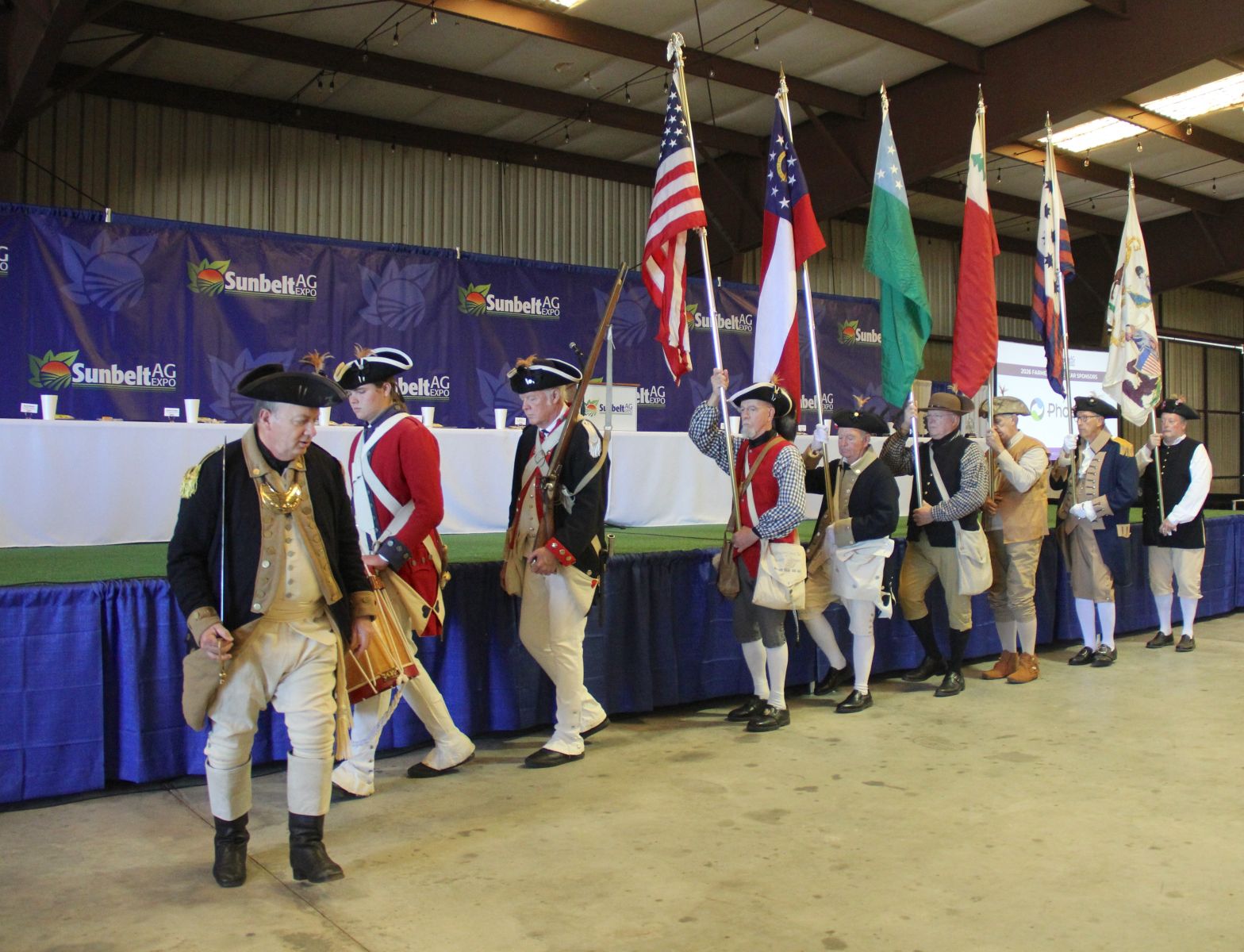
Members of the Georgia Society, Sons of the American Revolution presented the flags in various uniforms representing different regiments that fought in the Revolutionary War during the Willie B. Withers Luncheon. /Photo by Jennifer Whittaker
An America 250 banner was wrapped around the fire tower at the south gate on the Expo grounds and many of the tractors that participated in the daily antique tractor parade displayed American flags.
Florida farmer Woody Larson named Expo Southeastern Farmer of the Year
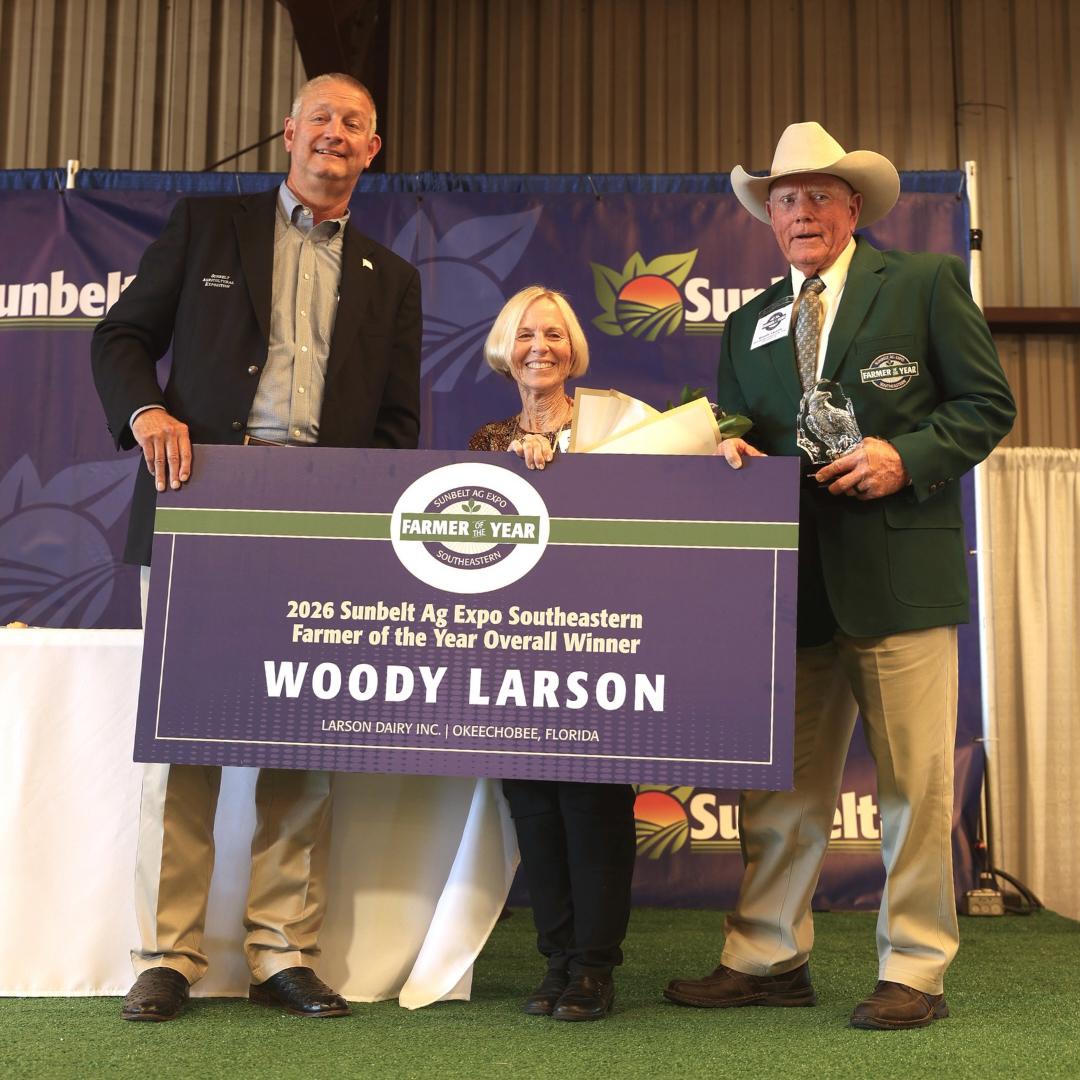
Sunbelt Ag Expo Executive Director Chip Blalock congratulates Grace & Woody Larson on being named the 2026 Sunbelt Ag Expo Farmer of the Year. /Photo courtesy of SAE
Dairy producer Woody Larson of Okeechobee, Florida, was named the 2026 Sunbelt Ag Expo Farmer of the Year during the Willie B. Withers Luncheon held the opening day of Expo.
Other state Expo Farmers of the Year were: Pete Gelber of Macon County from Georgia; Chuck Madaris III of Alabama, Murray Henderson, Jr of Arkansas; John Gross of North Carolina, Jeff Massey of South Carolina and Glenn Dye of Virginia.
Woody, who grew up on his family’s dairy, went to work full-time on the family farm – Larson Dairy Inc. (LDI) - after graduating from the University of Florida in 1973. At that point, LDI had three dairy farms milking about 800 cows each. After starting as farm manager, he was promoted to General Manager five years later. When a farmer was getting out of the dairy business and an opportunity came available, LDI purchased a few additional dairies. At one point, LDI managed over 12,000 milking cows, 8 milking units, and 20,000 animals in total.
Woody and his brother, John, were both interested in the family business. Once their father left the business, John and Woody each received a few of the dairy units and Woody continued on with the family farm name of LDI.
Today, LDI is family-owned and operated by Woody and his two sons, Travis and Jacob. The farm consists of two milking units totaling 6,400 cows, a calf barn raising 1,200 calves, and dry cow and heifer pastures consisting of 4,200 animals. LDI is located on 3,500 acres and provides over 100 jobs to the community.
While operating the dairy business full time, Woody began to establish his beef herd on the side. It is now just as important as the dairy. He owns more than 4,000 head of beef cows across thousands of acres on multiple ranches in Florida known as Dixie Ranch, 441 Cattle, and Old River Cattle.
The ranching enterprise is a cow/calf operation producing feeder calves. Calves are born in the fall or spring. Herds are managed by calving groups and marketed in truckload lots. The ranch markets their animals through a variety of different organizations. The healthy, easy-to-handle cattle coming off the ranch are in high demand and known to bring top prices in the market.
In 2016, Woody and his wife, Grace, decided to reduce their concentration in the dairy and focus on their beef cattle. Their sons, Travis and Jacob manage the dairy operation. The couple also have a daughter, Ginger, who lives in Ocala and enjoys bringing her family back to the farm for visits.
Returning program sponsors for the 2026 Farmer of the Year award are Harper Family Holdings, the Alabama Farmers Federation, Arkansas Farm Bureau, Florida Farm Bureau, Georgia Farm Bureau, North Carolina Farm Bureau, South Carolina Farm Bureau, Virginia Farm Bureau, Ag Georgia Farm Credit, Ag South Farm Credit, SW Georgia Farm Credit and Arkansas Farm Credit. New sponsors for 2026 include Phoebe Putney Health Systems.
As the overall winner, Woody received a $15,000 cash prize courtesy of the sponsors. Massey Ferguson North America is providing each state winner with a gift package and Woody with the use of a Massey Ferguson tractor for a year or 250 hours, whichever comes first. The sponsors also presented Woody with a green Expo FOY jacket. Hays LTI awarded Woody with a HAYS Smoker/Grill. Reinke Irrigation provided a Henry Repeating Arms American Farmer Tribute Edition rifle, and Howes sponsored a diesel prize package for the overall winner.
Each state Sunbelt Expo Farmer of the Year Award winner received a $2,500 cash award and an expense-paid trip to the Sunbelt Expo from the sponsors. The sponsors also gave each state winner and their nominator an Expo FOY vest. The Moultrie-Colquitt Co. Chamber of Commerce also gave each state winner a local keepsake.
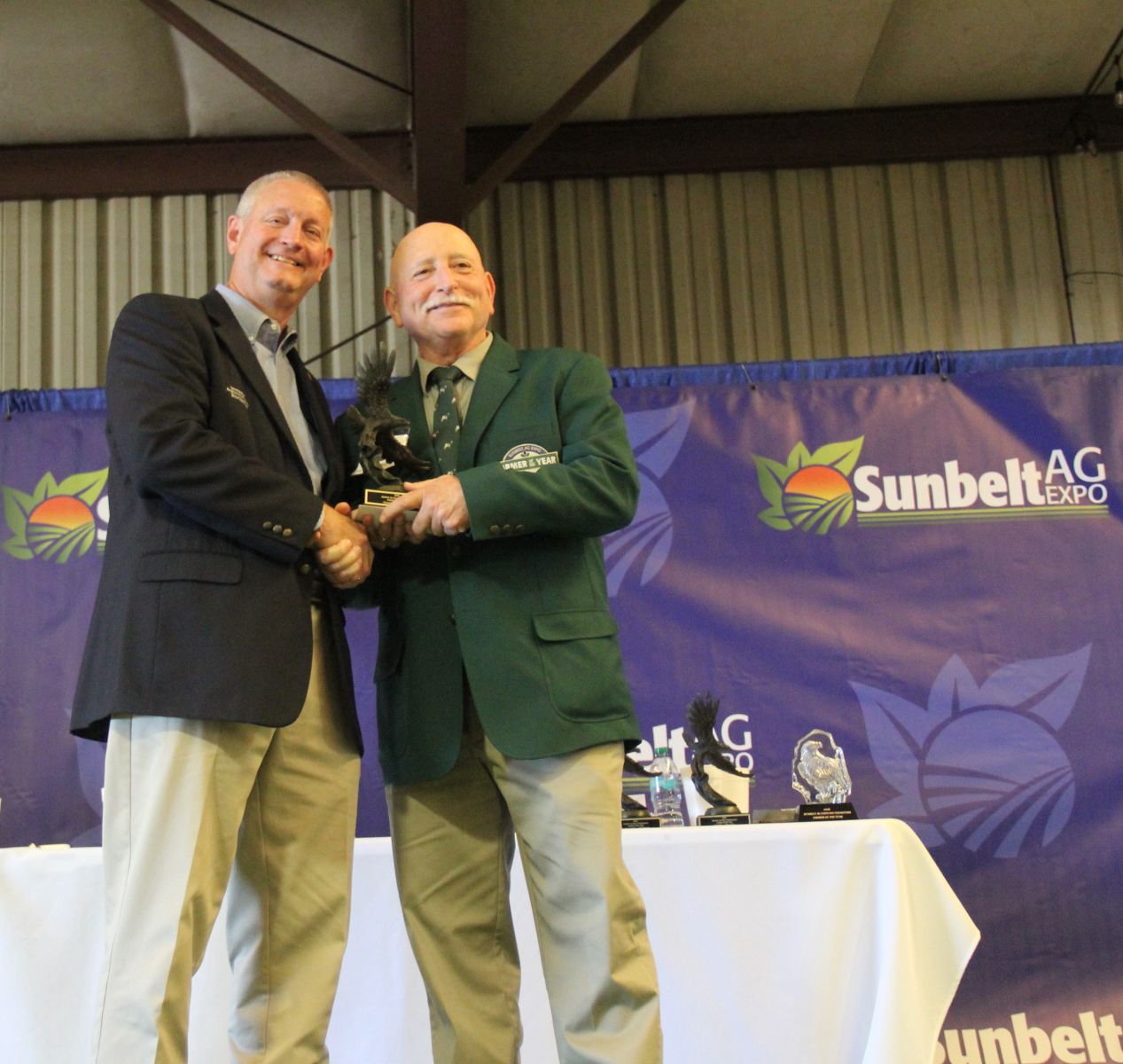
Sunbelt Ag Expo Executive Director Chip Blalock congratulates Georgia Expo Farmer of the Year Pete Gelber on being the state winner. /Photo by Jennifer Whittaker
Gelber, Georgia’s FOY, was introduced to the dairy sector as a child when he started working on a dairy farm in the summers near his parents’ cabin in upstate New York. Although he grew up in the Bronx, a part of New York City, Gelber enjoyed working on the dairy so much that he earned a degree in Animal Science at Cornell University.
After renting a small dairy, Gelber went to work for Ron St. John, who at the time was milking 700 cows in western New York. St. John moved to Florida in 1986, and Pete followed four years later. St. John became a mentor and friend to Pete. When St. John purchased a couple of bankrupt dairies in Montezuma, Georgia, Pete was made a partner in the newly attained entities.
In 2007, Pete moved to Montezuma, Georgia to manage the dairies full-time. Five years later, he purchased the dairies and assumed full ownership with his son, Richard Gelber. Pete’s three children and five grandchildren have all worked, or will work, on the dairy. His son, Richard, currently serves as the dairy’s operations manager, overseeing crop production, irrigation systems, and lagoon management. Pete’s wife, Dr. Elisabeth Reid, is a veterinarian.
“I have been extremely fortunate throughout my career to work with exceptional and generous partners,” said Pete.
Today, Pete’s 10,000+ acre operation is structured into four distinct business units. The farm headquarters, Barrington LLC, is located on the northern end of the property and houses half of the milking herd and all of the dry cows. Highbrighton Maco, on the south end of the property, houses the highest-producing cows and features a state-of-the-art 120-head rotary milking parlor. Pete milks 13,500 cows between the two facilities, producing around 1.3 million pounds of milk per day. Highbrighton Aglands and Barrington Aglands both function as cropping operations, producing corn, wheat, and millet silage that is supplied directly back to the dairies for feed. The four entities work in supporting the productivity, efficiency, and long-term success of the dairy farm.
Pete provides the pregnant cows that give birth in the Baby Barn at the Georgia National Fair each fall. He opens his farm up for tours and field trips, allowing students, veterinary students, and industry professionals to learn about a modern dairy operation firsthand. He also provides internships on the farm for students from multiple states interested in veterinary science or dairy science.
UGA Extension coordinates the Expo Farmer of the Year program for Georgia. Macon County Extension Agent Madison W. Luke nominated Pete for the Georgia Farmer of the Year.
South Carolina featured as Expo Spotlight State
South Carolina had the honor of being the Expo Spotlight State for the fifth time since Expo started featuring a different state each year in 1981.
South Carolina has more than 22,600 farms and 4.6 million acres of farmland, according to the South Carolina Department of Agriculture. The exhibit theme was “Growing SC from Ag to Z,” which highlighted the variety of commodities South Carolina farmers produce ranging from row crops to livestock, poultry, and forestry. The top 10 commodities produced in the state include broilers, turkeys, cattle, eggs, greenhouse products, cotton, corn, soybeans, peanuts and wheat, according to the South Carolina Farm Bureau (SCFB).
South Carolina State University and Clemson University – both land grant universities – had booths in the exhibit along with the South Carolina Governor’s School for Agriculture at John de la Howe. The S.C. Governor’s School for Agriculture is a state-funded, public residential high school focused on providing a unique and challenging agricultural education program. The program is the first of its kind in the nation. Students receive hands-on training in agriculture, agribusiness, forestry, land management, food science, and more. The school is focused on meeting the needs of modern farms and growing the future leaders in South Carolina's largest industry.
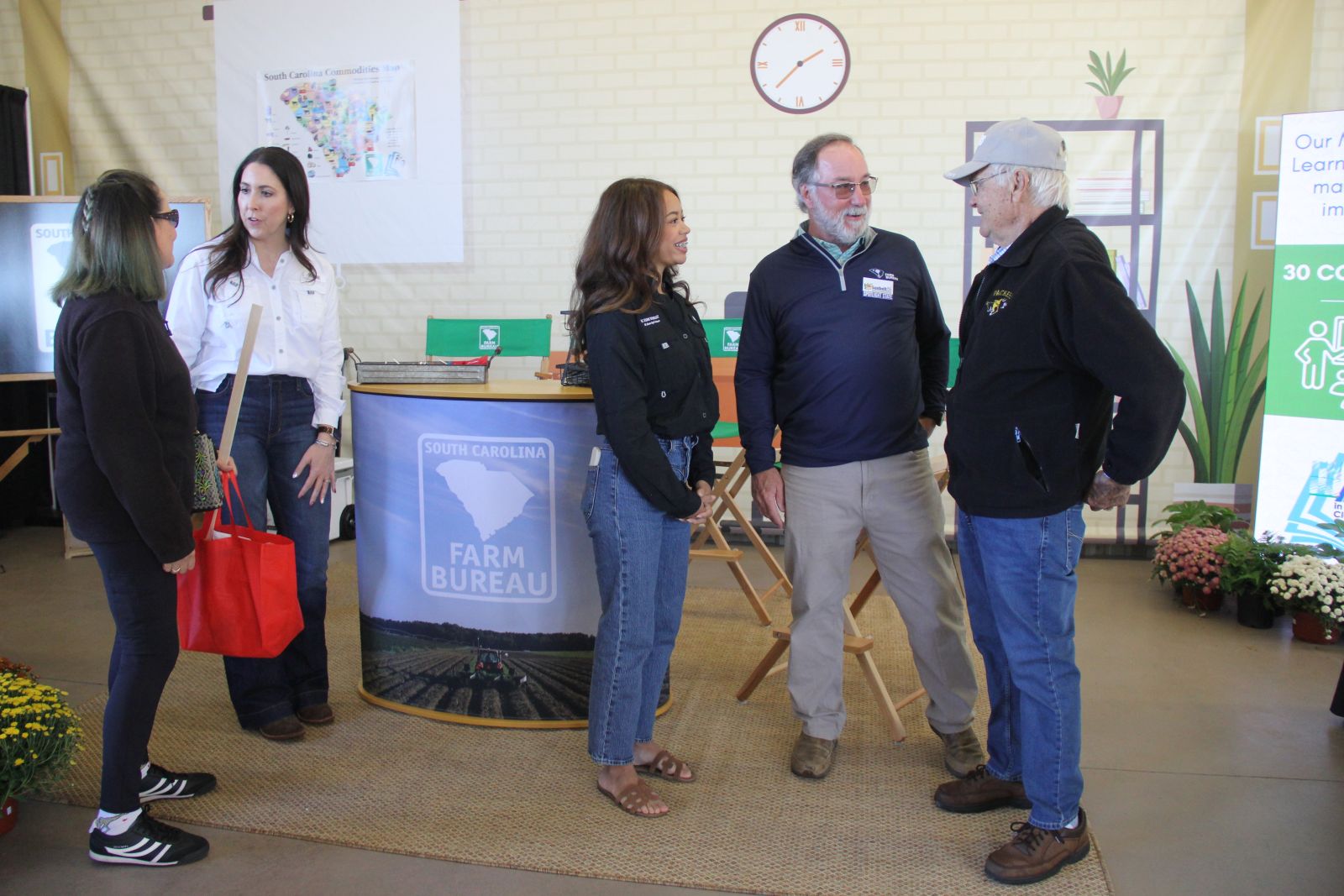
South Carolina Farm Bureau showcased its legislative advocacy and ag education efforts along with the work it is doing to preserve farmland. The S.C. Department of Agriculture displayed information about its Certified South Carolina program. /Photo by Jennifer Whittaker
Drivers also reminded to safely pass slow-moving farm vehicles
The Governor’s Office of Highway Safety (GOHS) and Georgia Department of Agriculture reminded motorists to choose to wear their seat belt on every trip and drive at safe speeds in order to be able to slow down and safely pass farm vehicles during their annual "Yield Behind the Wheel" farm vehicle safety news conference at held on Oct. 21 at the Sunbelt Expo.
According to the National Highway Safety Administration's (NHTSA) Fatality Analysis Reporting System (FARS), more than 35% of the fatal vehicle crashes in Georgia from 2020-2024 happened in rural areas even though census data showed that approximately 24% of the state's population lived in rural areas.
A recent preliminary study on front seat daylight observed seat belt use in Georgia found just over 80% of rural road passenger vehicle occupants were wearing seat belts compared to 90% of front seat passengers wearing seat belts during daylight hours in the Atlanta Metropolitan Statistical Area (MSA),
Federal crash data showed more than 53% of passenger vehicle occupants killed in crashes in rural areas in the state from 2020-2024 were not wearing seat belts compared to 47% of passenger vehicle occupants killed in crashes in urban areas in Georgia from 2020-2024 were not wearing seat belts.
“Taking a few seconds to click a seat belt before every trip can lead to a lifetime of memories with family and friends,” said GOHS Director Allen Poole. “Seat belts are the most important piece of safety equipment in your vehicle because all of the safety features are designed to be most effective when you and your passengers are properly restrained.”
With the fall harvest season in full swing, GOHS and the Georgia Department of Agriculture continue to remind drivers to be alert when traveling in rural areas where Georgia producers are moving equipment from fields and transporting their crops to market.
Drivers are reminded to obey the posted speed limit and keep their eyes on the road so they can slow down when approaching slow-moving farm vehicles and to give plenty of room when passing. According to preliminary state crash data, 15 people have died in crashes with farm vehicles in the state from 2021-2025.
“As Georgia's farm families prepare for the upcoming harvest season, Georgians can expect to see more farm vehicles on rural roads across our state,” Georgia Agriculture Commissioner Tyler Harper said. “I want to encourage all drivers - especially those in rural areas - to watch out for farm equipment, obey the speed limit, and wear a seat belt. Following the rules of the road will help us reduce traffic crashes and help ensure you arrive alive.”
GOHS and the Georgia Department of Agriculture remind all producers to make sure their farm vehicles are equipped with legally required safety warning devices before traveling on the road. Georgia law requires all farm vehicles and wagons on the road to have orange, triangle-shaped signs. These signs let other drivers approaching these vehicles know that the vehicle ahead is traveling at a speed that is significantly slower than the normal flow of traffic.
For more information about the Governor's Office of Highway Safety or Georgia Department of Agriculture, visit www.gahighwaysafety.org or www.georgiagrown.com .
Atlanta butcher wins Georgia Peanut Product Innovation Award
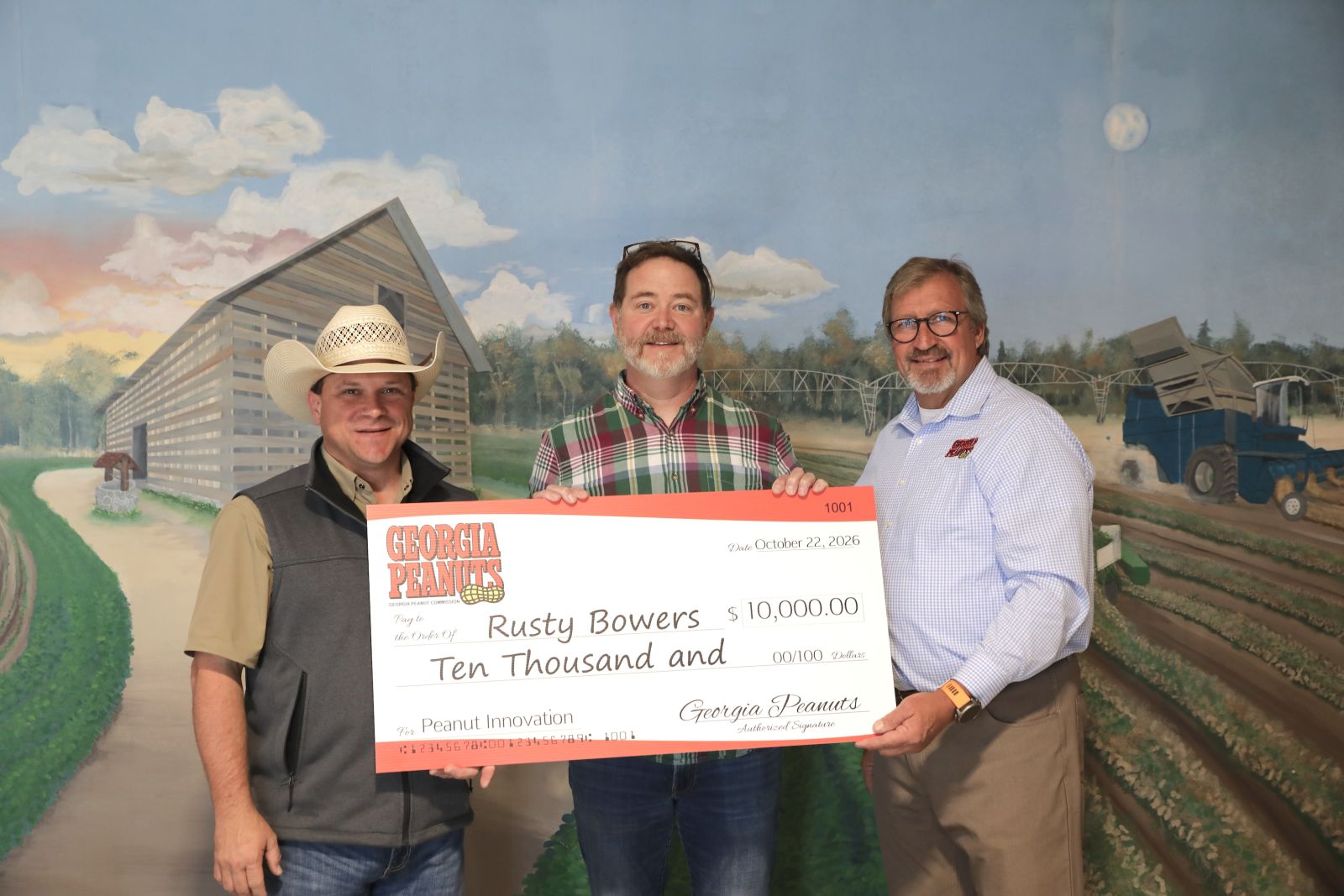
Rusty Bowers, center, owner of Pine Street Market in Avondale Estates, received a $10,000 prize check from the Georgia Peanut Commission Oct. 22 for his entry in the Georgia Peanut Product Innovation Award contest. Georgia Commissioner of Agriculture Tyler Harper and Georgia Peanut Commission Chairman Donald Chase presented the award at the Sunbelt Ag Expo in Moultrie, Georgia, for his “Georgia Peanut Potlikker Sausage,” which features local chicken, peanuts and collard greens. The sausage won the innovation prize for demonstrating both creativity and exceptional flavor. /Photo courtesy of Georgia Peanut Commission.
“Peanuts are like the essence of Georgia to me,” Bowers said. “I’ve visited the farms and the shelling facilities and know how important peanuts are to our state. I really want to create a salute to Georgia agriculture... which is why I chose a chicken sausage with peanuts, collard greens and herbs. I felt like I was telling a Georgia story.”
Georgia farmers grow more than 50 percent of all the peanuts produced in the United States each year.
The Innovation Award contest, created by the Georgia Peanut Commission, recognized the food-related concept that best presented peanuts in a unique and desirable way. The contest received 28 entries, and the top 5 finalists were required to submit product samples. The judging panel was comprised of experts in food innovation, start-up finance, retail distribution, and an executive chef, who worked independently to grade the product concepts based on several criteria.
“Georgia Peanuts are one of the most sustainable protein sources produced in America,” Chase said. “They require less water and help improve the soil health. That’s becoming increasingly important these days, so it stands to reason we should be finding more and more uses for them. There may only be one winner, but there were several concepts we believe are worthy of continued conversations and support.”
Harper also praised the winning product for highlighting the versatility of Georgia peanuts and the creativity of the state’s food producers.
“Congratulations to Rusty Bowers and Pine Street Market on winning the Georgia Peanut Innovation Award! His Georgia Peanut Potlikker Sausage is a great example of the creativity and innovation that make Georgia agriculture so special,” Harper said. “By bringing together Georgia peanuts and other local ingredients, this product showcases the incredible flavors of our state and the hardworking farmers behind them. It also reminds us that Georgia peanuts have universal appeal and can be enjoyed in so many different ways.”
- Categories:
- Tags: