GFB News Magazine
2026 Georgia legislative session good for agriculture
by Adam Belflower
GFB State Affairs Coordinator
Posted on May 30, 2026 3:32 AM
With the end of the governor’s bill review in May, another successful session concludes for Georgia agriculture. Georgia Farm Bureau applauds the Georgia General Assembly’s support of the state’s number one industry. As this is Gov. Brian Kemp’s last legislative session, we want to say a special thank you for the way he has steered the state the last eight years and championed rural Georgia.
Agricultural producers are facing extremely challenging times amid a struggling farm economy and recent natural disasters, but elected leaders have helped ensure that farmers can remain resilient. Below are key pieces of legislation related to agriculture enacted following the 2026 legislative session.
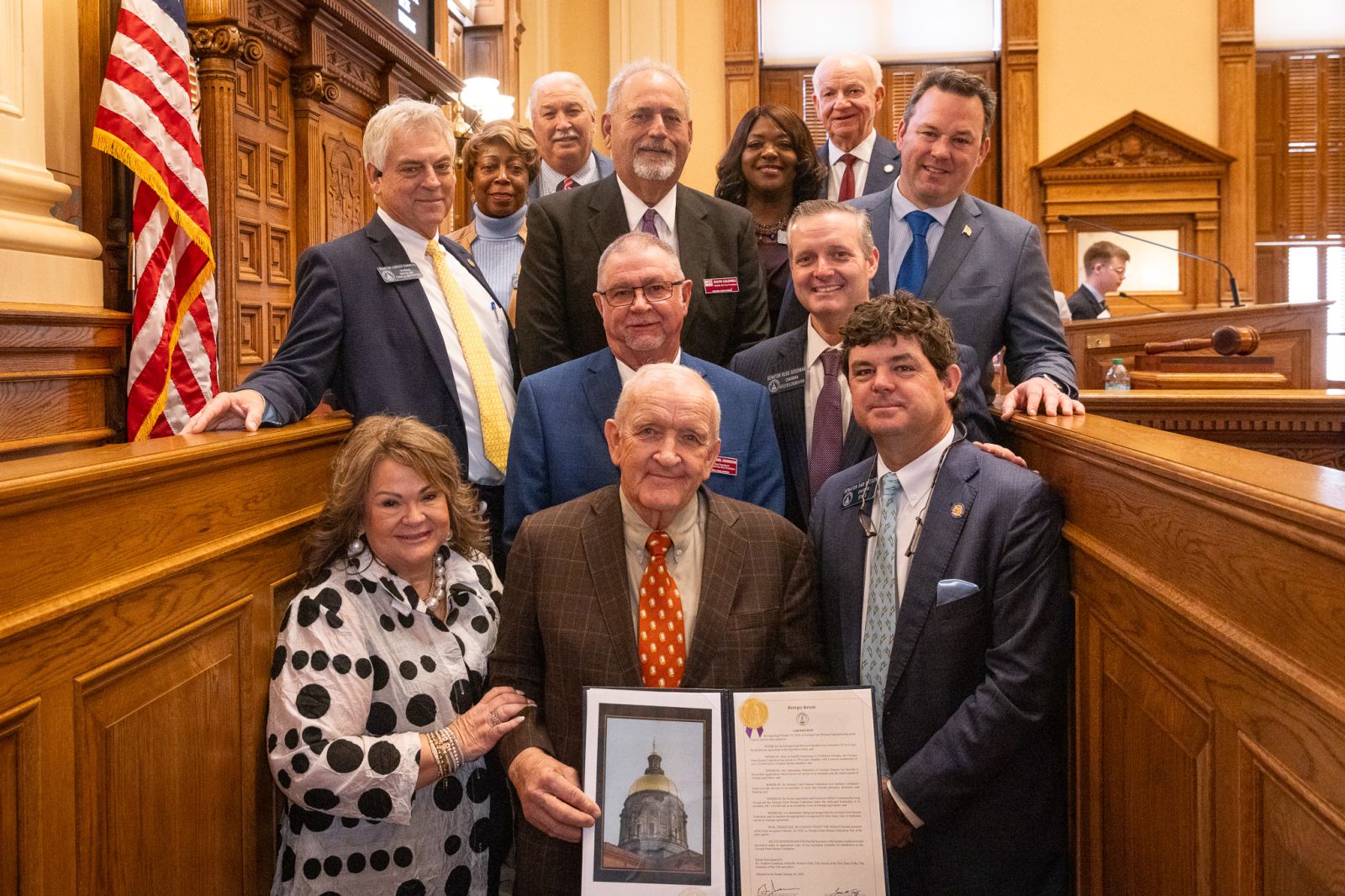
Georgia Senate leaders presented Georgia Farm Bureau leaders with a resolution recognizing Georgia Farm Bureau on GFB Day at the Capitol, Feb. 10. /Photo courtesy of Ga. Senate Press Office
Forestry initiatives
Due to lingering effects from Hurricane Helene and the closure of multiple timber mills, Georgia’s timber markets are strained, leaving landowners with greatly diminished timber investments. By expanding existing incentives to attract new forestry manufacturers to Georgia, HB 134, by Rep. Beth Camp (R-Concord), incentivizes the creation of new markets and bolsters existing markets for our state’s timber, keeping Georgia the premier state for forestry. GFB also acknowledges Rep. Jesse Petrea (R-Savannah) for his work on HB 1085. The language in HB 134 was originally in HB 1085.
Water plan
During the fall of 2025, in cooperation with the State Water Council, Georgia Farm Bureau and other stakeholders provided feedback to make meaningful changes to the statewide water plan. HR 1008, by Rep. Lynn Smith (R-Newnan), ratifies the amendments, which aim to alleviate situations in which councils have struggled to function due to low participation. These changes will help streamline policymaking, provide a designated seat at the table for agriculture, and strengthen local communities’ ability to provide input into resource management decisions.
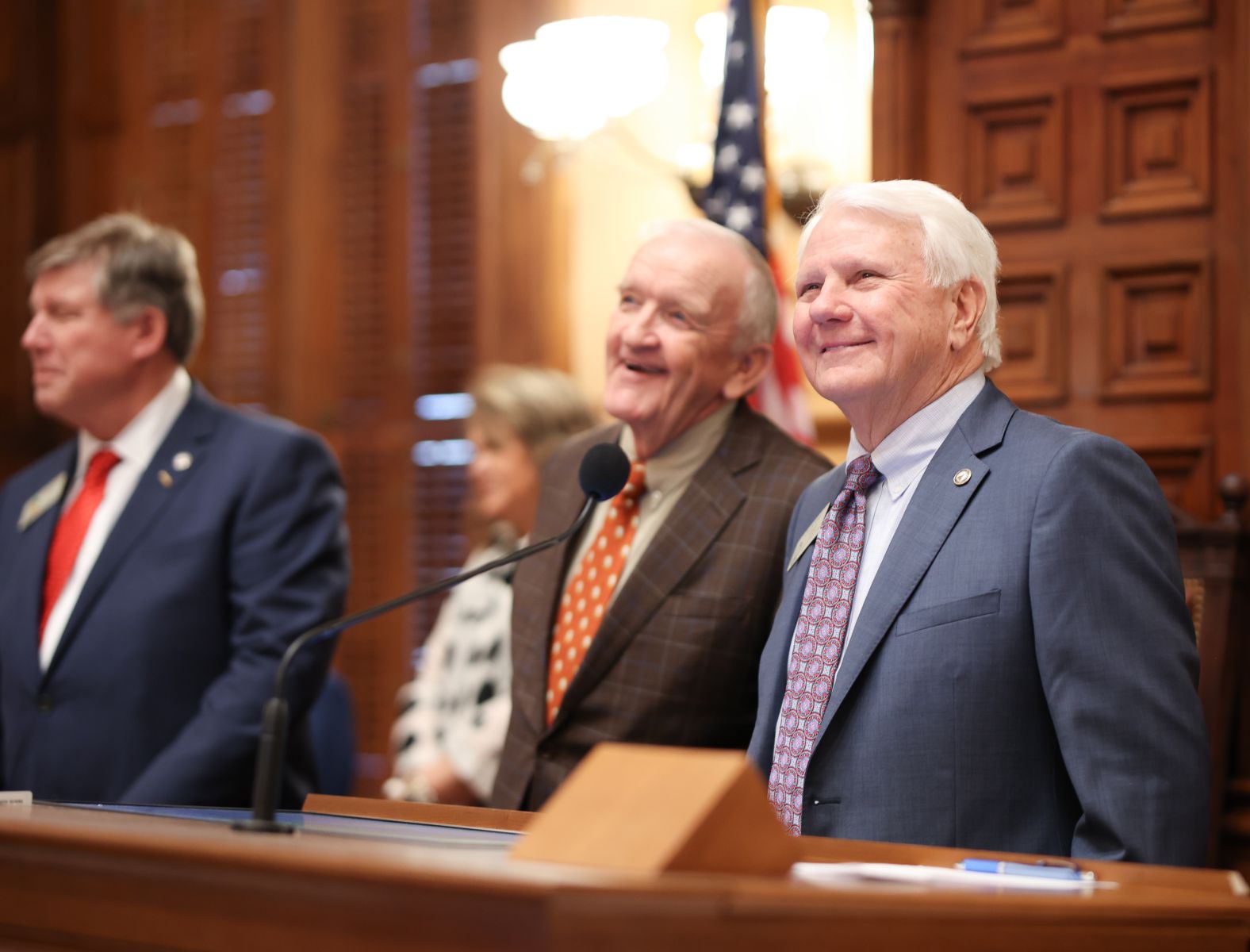
GFB President Tom McCall, center, visits the Georgia House as guest of Rep. Robert Dickey, left, and House Speaker Jon Burns during GFB Day at the Capitol. /Photo courtesy of House Media Services
Taxes
Tax policy was heavily debated this year. State income tax legislation HB 463, by Rep. Shaw Blackmon (R-Bonaire), and homestead property tax legislation SB 33, by Sen. Kay Kirkpatrick (R-Marietta), were in the spotlight. The underlying objective of both bills is to keep more dollars in Georgians’ pockets.
HB 463 will lower the state income tax rate to 4.99% for 2026, establish triggers to incrementally lower the tax to 3.99%, decouple the corporate and personal income tax rate, increase the standard deduction, retirement income exclusion and dependent deduction, and repeal certain tax credits to replace lost revenue.
SB 33 caps the increase on valuation assessments for homestead properties at the rate of inflation and gives local governments the option, if agreed upon by a referendum, to utilize a floating local option sales tax (FLOST) to offset all types of property tax or a homestead option sales tax (HOST) to offset only homestead property tax.
In December 2025, the USDA first announced the Farmer Bridge Assistance program, a $12 billion lifeline for our nation’s farmers. HB 1159, by Rep. Matthew Gambill (R-Cartersville), makes payments received exempt from state income tax, further extending this lifeline by keeping more of those dollars in the pockets of the farmers who need it most.
CUVA
The Conservation Use Value Assessment (CUVA) program has been crucial in preserving Georgia’s farmland for decades. Georgia Farm Bureau leads the fight to protect CUVA and ensure producers are covered by this program. SB 306 by Sen. Randy Robertson (R-Catuala) included a few small changes to the program that do not represent any significant policy shifts. These changes clarify that a landowner can trade carbon credits while enrolled in a covenant, allow notification by email and certified mail of an expiring covenant, provide an option to merge covenants on a singular timeline, and create a 180-day grace period for the conversion of CUVA to the Forest Land Protection Act (FLPA) at the time of acquisition.
State budget
Both the amended 2026 fiscal year budget and the 2027 budget were full of investments in agriculture. Due to major tax cuts the General Assembly implemented, Gov. Kemp had to line-item veto multiple items to account for the decreased revenue. Even after the cuts, many investments are still in place that will benefit farmers. These investments support the Georgia Department of Agriculture, University of Georgia, and promote innovation in agriculture. For a comprehensive review of the budget, visit www.gfb.org/advocate/session-reports.
Heading into the interim, Georgia Farm Bureau is eager to work with Rep. Robert Dickey (R-Musella) and Sen. Russ Goodman (R-Cogdell) as they chair the Joint Study Committee on the Generational Sustainability of Family Farms, created by HR 1416. The Ag Committee chairmen have heard the struggles of Georgia farmers and experienced them on their own farms.
This committee will look into the inflationary pressures impacting the cost of inputs, suppressed market conditions, and the systems that support farmers. Most importantly, the chairmen want to hear input from farmers across the state. To stay current with Georgia and federal legislative activities, sign up for the Georgia Farm Bureau Action Center at www.gfb.org/advocate/public-policy.
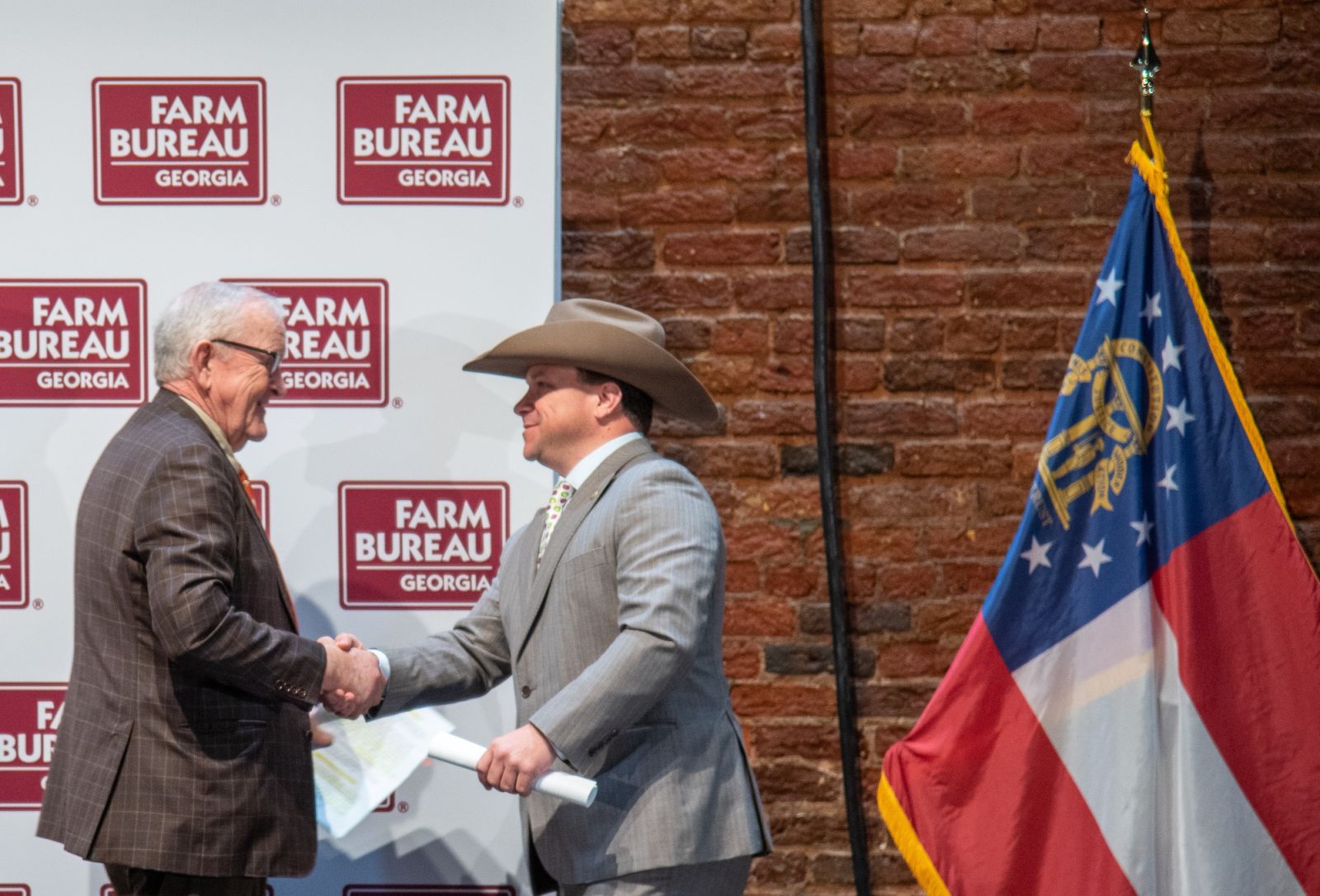
GFB President Tom McCall welcomes Georgia Commissioner of Agriculture Tyler Harper to the GFB Day at the Capitol Lunch. /Photo by Logan Thomas
Cotton & eggs
Cotton has long been a staple crop in Georgia. This year the General Assembly passed HB 1310, by Rep. Jaclyn Ford (R-Tifton), designating cotton as the official state fabric. This bill highlights the importance of cotton production to Georgia and the need to support cotton farmers by choosing cotton fabrics.
SB 551, by Sen. Sam Watson (R-Moultrie), repeals the Georgia Department of Agriculture's egg candling program. The existing program is outdated and creates barriers to non-commercial egg producers from participating in local markets; this bill changes that by repealing the program entirely.
Adam Belflower is Georgia Farm Bureau’s State Affairs Manager. He may be reached at acbelflower@gfb.org or 478-474-0679, ext. 5259.