GFB News Magazine
Federal Reserve VP hears from Georgia farmers
by Jennifer Whittaker
GFB News Editor
Posted on May 30, 2026 11:27 PM
Members of Georgia Farm Bureau’s Commodity Committees met Kevin Dancy, Federal Reserve Bank of Atlanta vice president & regional executive, at the March 16 GFB Commodity Meeting. Dancy asked the farmers to share their thoughts on how rising input costs and other factors are causing them economic problems.
“I spend my time traveling and talking to farmers, CEOs, industries, nonprofits and government, to get a real-time picture of what the economy is doing and where things are,” Dancy said.
Below are questions Dancy asked and answers farmers gave.
If you saw interest rates cut, would you still borrow money?
GFB President Tom McCall said, “Ninety-nine percent of farmers don't have a choice. You have to borrow money to put in a crop and buy a piece of machinery or sometimes fix what you have. What the Fed needs to understand is the money they {farmers} save on cheaper interest rates will go back into the economy. It’s not going into a savings account somewhere that’s not benefiting the general public.”
Decatur County pecan grower Rob Cohen pointed out farmers and agriculture are vital to the stability of rural economies.
“The farming dollar turns over seven times in the local community,” Cohen said. “It’s not only impacting us on the farm, but also the lady that’s got the dress shop downtown and the guy who has a restaurant. Farmers being profitable is a big deal.”
Would having lower interest rates help farmers tackle higher input costs?
Jeff Davis row crop farmer Jerry Wooten replied, “In 1972, interest was about 8%. I could borrow $8,000 and farm around 350 acres. I borrowed that $8,000 at 8% interest for $640. That same 350 acres today costs at least $150,000 to farm. Our inputs are so high today that we have to borrow more money to farm than I did when I first started. You won’t borrow money today for less than 7%, and if you don’t have good credit you’re probably going to pay 8% or more.”
How do higher input costs keep American farmers from competing globally?
“You’ve got a couple of companies that have the monopoly on the [cotton, corn and soybean] seed we plant. Brazil, one of our main competitors, doesn’t pay the same technology fees we do,” Jeff Davis farmer Jamie Tate said.
Macon County peanut and poultry farmer Donald Chase said equipment costs are requiring farmers to borrow more money.
“You need to make investments in equipment to stay efficient, but those things have risen inordinately in the last five years,” Chase said.
Are lenders tightening credit? Is this causing financial stress?
Longtime farmers discussed how hard it is for young farmers to get loans to start farming because banks need collateral.
“I’ve got two boys trying to get established. It’s a struggle for them to get the credit necessary to pay just cash flow,” said Troup County dairy farmer Joel Keith. “When I go to get a loan, the banks are now looking for my wife’s W-2. My sons and their wives don’t have advanced sweat equity or salary.
Chase mentioned land ownership is unaffordable for young farmers.
“I think everybody in this room is concerned land ownership is almost out of reach for young farmers,” Chase said. “If we’re going to be sharecroppers again, I don’t know I could recommend that to my children.”
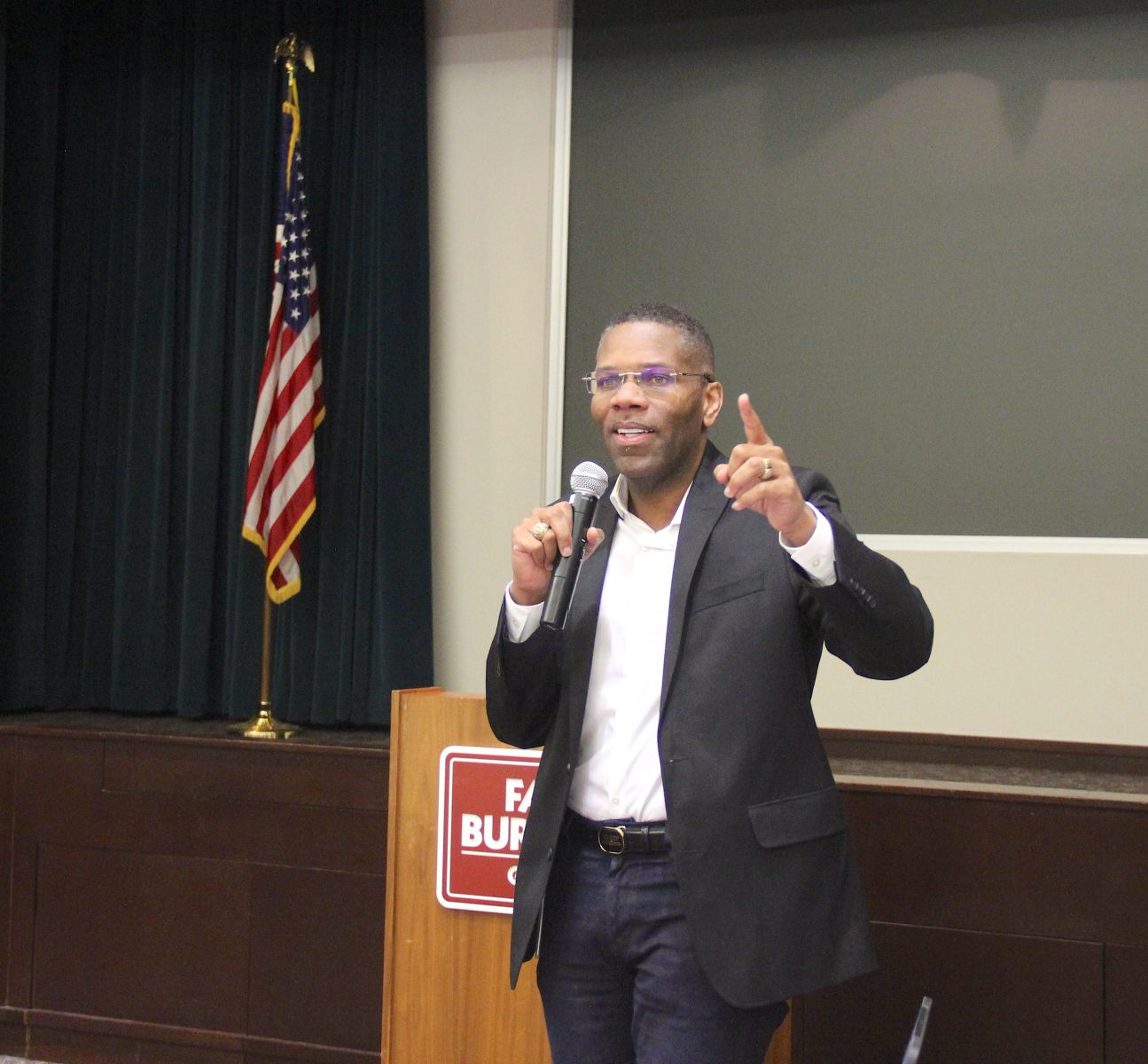
Federal Reserve Bank of Atlanta Vice President & Regional Executive Kevin Dancy. /photo by Jennifer Whittaker
What are farmers experiencing when asking for operating loans?
“There’s no profitability because all the input costs are so high. You come to the point where the banker says, ‘This won't pencil out. You can't make a profit,’” Bacon County row-crop farmer Cory Tyre said. “How are you going to borrow money to grow a product that you can't make a profit on? One crop is profitable this year. That’s great, but you have to be able to grow multiple crops because sustainability is key to farming. You’ve got to rotate your land.”
The Fed is looking at resources, tools to help farmers.
“Agricultural loans, particularly small farm loans, are a part of the Community Reinvestment Act. This is a tool we have at our disposal that we can better educate financial institutions on,” Dancy said. “The challenge comes in high concentration. When you get a rural bank that's in South Georgia that has a huge concentration of community development agriculture loans facing this profit loss, it can look like a risk on that institution. That’s where we educate our examiners that this is part of the industry and how the industry ebbs and flows.”