GFB News Magazine
GFB leaders tell lawmakers about farmers' struggles
by Jay Stone
News Writer
Posted on May 28, 2026 3:34 PM
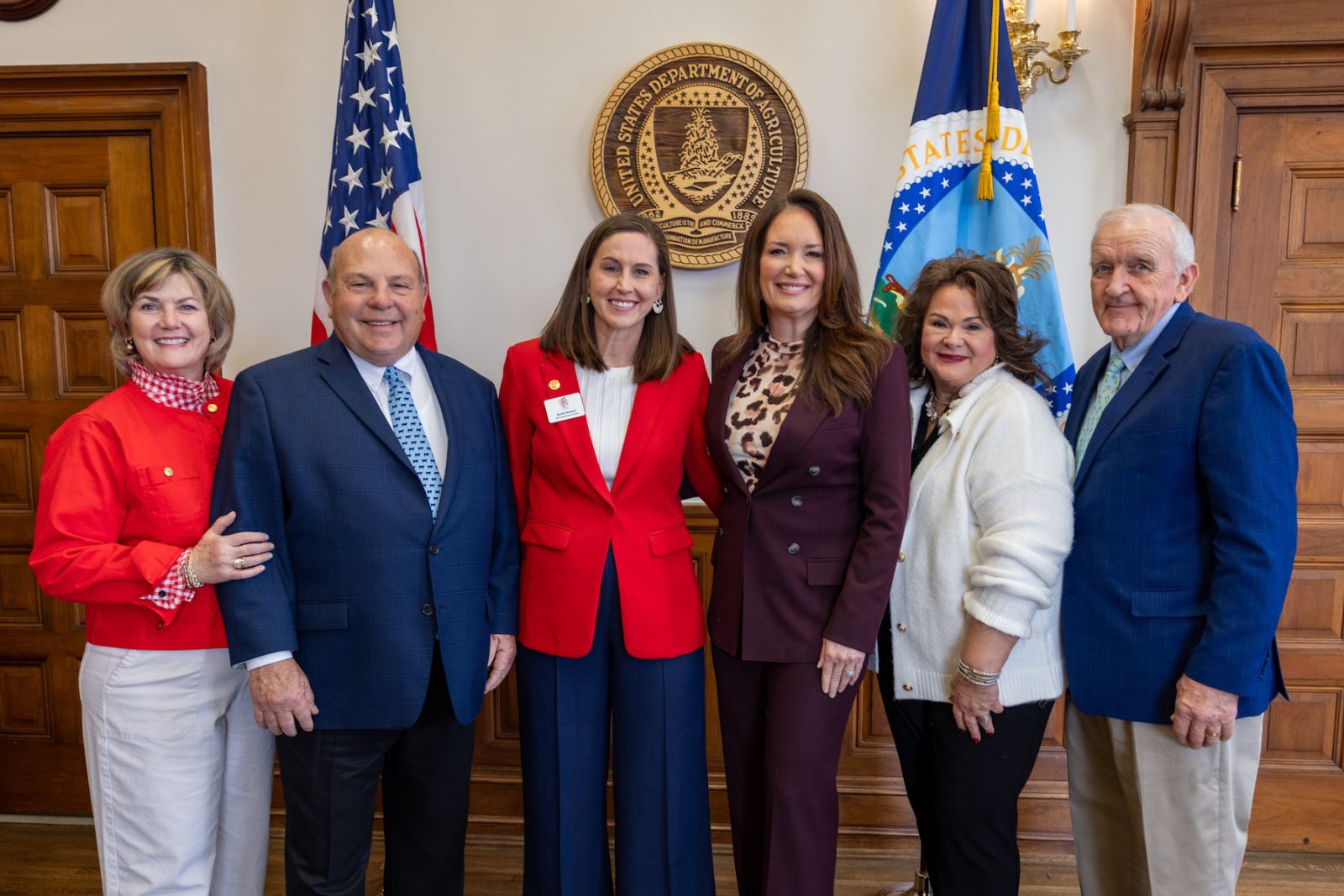
Morgan County Farm Bureau Director Rachel Kinsaul, center, was in D.C. at the same time GFB visited. Kinsaul, the 2026 Georgia Teacher of the Year, was interviewing as a finalist for the National Teacher of the Year. While there, she visited with Agriculture Secretary Brooke Rollins. GFB President Tom McCall & his wife, Jane, on right, and AFBF President Zippy Duvall & his wife, Jennifer, on left, joined Kinsaul in meeting with Rollins. Although Kinsaul did not receive the national award, GFB is proud of her for being a national finalist and the attention she has brought to ag education this past year. /Photo courtesy of AFBF
The annual Georgia Farm Bureau Presidents’ trip to Washington, D.C., gave GFB members an important opportunity to interact directly with members of Georgia’s congressional delegation. This year, they carried a particularly weighty burden.
A group of 28 GFB leaders from county chapters and the GFB board visited Washington March 3-5, carrying stories of the many ways they’re running into barriers to success, from rising input costs to international trade challenges. The elevator speech was this: Farming that is not profitable is not sustainable, and farmers and ranchers need help.
On March 3, the GFB group heard presentations from American Farm Bureau staff during an after-lunch briefing covering trade, labor costs, the farm bill, water and more.
On March 4, the GFB group took to Capitol Hill where they met with Reps. Barry Loudermilk, Austin Scott, Buddy Carter, Rick Allen, Brian Jack and Mike Collins, Sen. Jon Ossoff and staff for Rep. Andrew Clyde and Sen. Raphael Warnock, as well as staff for the Senate Agriculture Committee.
The GFB group shared messages about the farm bill, disaster assistance, farm labor and trade, with the overriding mission of focusing attention on farmers’ need for profitability. Discussions included developments related to U.S. military operations in the Middle East. GFB members pointed out that diesel prices jumped by 85 cents per gallon virtually overnight, compounding already dire financial conditions for farmers.
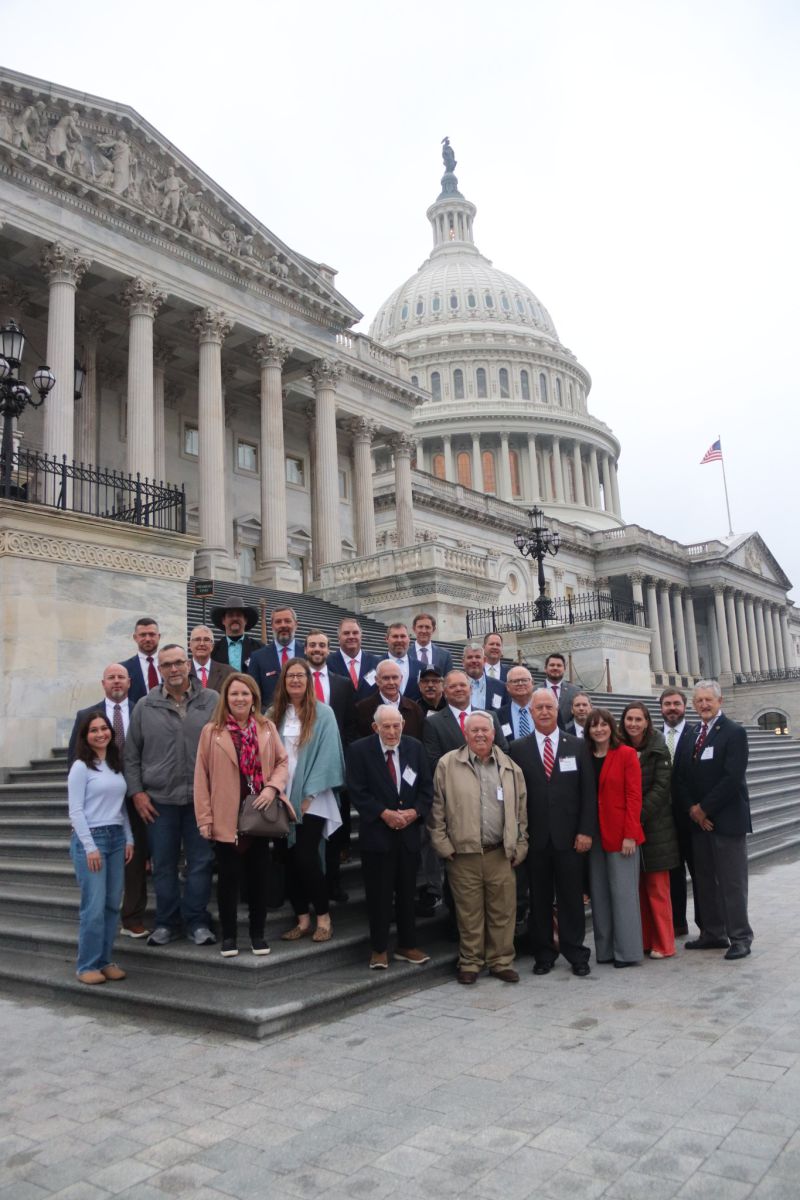
GFB members toured the U.S. Capitol during a March trip to D.C. /Photo by Jay Stone
AFBF Briefings
Farm Bill
AFBF Government Affairs Director Brian Glenn gave the farm bill briefing. Coincidentally, on March 3, the House Agriculture Committee began markup on the Farm, Food, and National Security Act of 2026. The House passed its farm bill on April 30.
The bill addresses farm bill titles not addressed in the One Big Beautiful Bill Act passed July 2025. Glenn said AFBF has several priorities for a modernized five-year farm bill, including federal loan programs, rural development, research and Extension, forestry and energy.
“China outspends us on ag research two to one,” Glenn said. “We need smart policy that moves us forward, gets us that technology, that innovation that moves us forward. So, this bill really focuses a lot on that.”
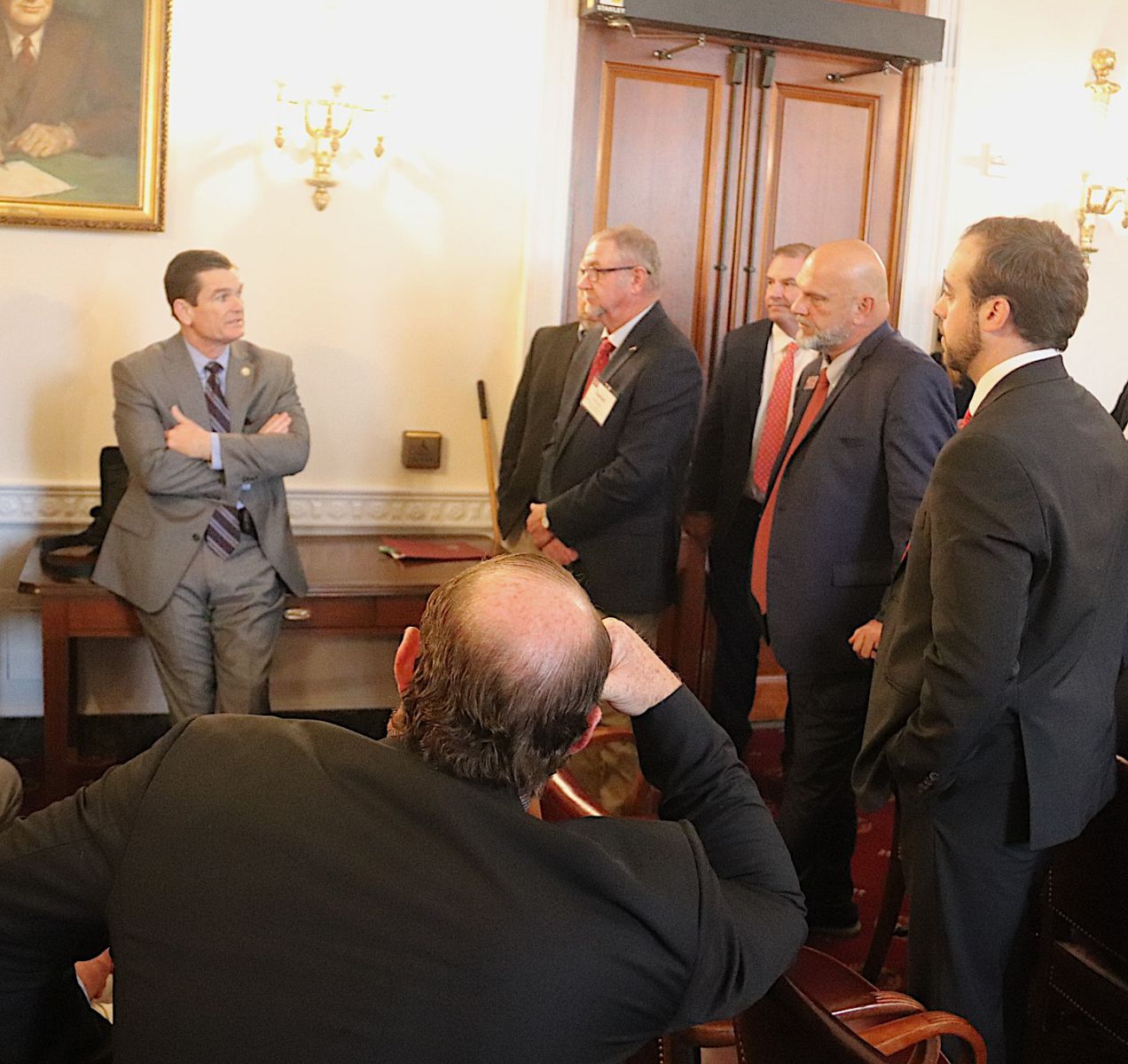
GFB members visit with Rep. Austin Scott, standing far left. /Photo by Jay Stone
Trade
AFBF Senior Director of Government Affairs Dave Salmonsen discussed trade issues. While the United States has reached trade agreements with numerous nations in the past year, Salmonsen emphasized that China’s influence over agricultural trade cannot be overstated.
In October 2025, the U.S. and China agreed to delay additional tariffs for one year. The U.S. tariffs on imported goods from China were reduced from 59% to 49%, while China’s tariffs on imports from the U.S. were reduced to 21.9% and port fees were delayed. China committed to buying 12 million metric tons of soybeans in 2025 and 25 million metric tons annually moving forward.
Salmonsen said tariffs are the Trump administration’s tool of choice to generate revenue, create leverage to achieve economic and non-economic objectives and reindustrialize the U.S. economy. The administration has faced legal challenges on some of its trade policy and has been rebuffed by U.S. courts on multiple points.
The U.S. last had an ag trade surplus in 2021, though Salmonsen said the deficits since then are based more on value than volume.
Labor
AFBF Director of Government of Affairs John Walt Boatright discussed ag labor and farmers' costs associated with it. Congress has been slow to take action on migrant labor, with some legislators saying they will not address it until the border is secure.
Boatright reviewed the status of numerous federal rules related to immigration and labor:
• The methodology the U.S. Department of Labor (DOL) used to determine the Adverse Effect Wage Rate is under a nationwide injunction.
• The Department of Homeland Security’s U.S. Citizenship & Immigration Service fee schedule and changes to certain other immigration benefit request requirements is still in effect.
• The DOL Overtime Pay Rule is on hold.
• The OSHA Worker Walkaround Representative Designation Process is still in place.
• The DOL Independent Contractor Rule is no longer being enforced.
• Improving Protections for Workers in Temporary Agricultural Employment in the United States that took effect June 28, 2024, may be rescinded following court decisions.
• The rule that took effect Jan. 17, 2025, modernizing H-2A program requirements, oversight, and worker protections is still in place.
• The OSHA proposed heat standard is still pending.
Waters of the United States
AFBF Senior Director of Government Affairs Courtney Briggs reviewed the latest developments on the Waters of the United States (WOTUS) rule. Notably, the definition of WOTUS is significantly narrowed under an EPA Interim Final Rule currently undergoing the regulatory review process. The new definition takes into consideration the seasonal moisture variations by geographic area.
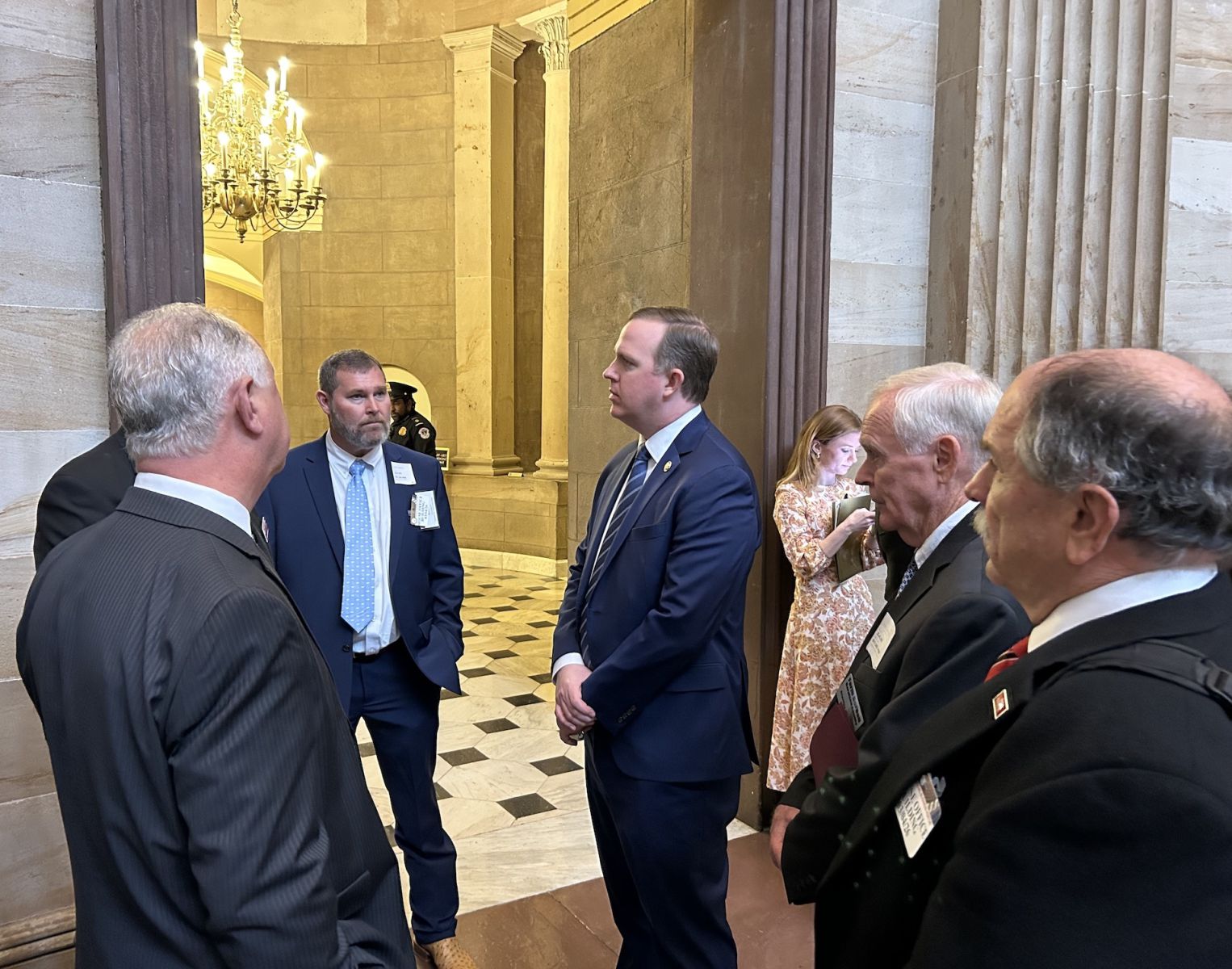
Rep. Brian Jack, far right, visits with GFB members outside the U.S. House chamber on March 4. /Photo by Ken Murphree