GFB News Magazine
Unwelcome guests: Georgia working to keep animal diseases out
by Jay Stone
Posted on March 2, 2026 10:06 AM
A variety of animal diseases have been in the news in recent years. Georgia’s obvious goal is to keep them out.
State Veterinarian Janemarie Hennebelle outlined what’s here and what could be on the way when she spoke to livestock producers at the Georgia Farm Bureau Convention in December. Hennebelle primarily focused on three diseases: Equine herpesvirus (EHV), New World Screwworm (NWS) and Highly Pathogenic Avian Influenza (HPAI).
“These are all things on our radar that you’re having to track as producers,” Hennebelle said.
As of March 4, six Georgia commercial poultry flocks have been depopulated following positive tests for HPAI since January 2025. The state has gone to great lengths to prevent outbreaks when possible and contain the ones that occur.
Since the beginning of the current HPAI outbreak in 2022, approximately 184 million birds have been affected nationwide.
“We’re not seeing a wave of cases move across the country,” Hennebelle said. “It is everywhere all at once.”
Biosecurity and proper disposal of dead birds and waste are key steps in controlling HPAI, Hennebelle said.
While HPAI is an ongoing concern for Georgia’s highest earning commodity sector - broilers and eggs generated more than $7 billion in farm gate value in 2024 - the state’s dairy producers are also having to watch their herds after more than 1,088 cases at dairies in 19 states, mostly in Texas, the Midwest and western U.S., have had herds infected with HPAI since 2024. At press time in March, HPAI had not been detected in any Georgia dairy herds.
SOURCES FOR HPAI INFORMATION
Georgia Poultry Lab HPAI reporting line
https://www.gapoultrylab.org/avian-influenza-hotline/
DNR dead wild birds reporting line
Call 1-800-366-2661 or report at https://georgiawildlife.com/report-dead-birds
Protect Your Flock flyer
https://gfb.ag/protectyourflock
Georgia Department of Ag FAQ
USDA Defend Your Flock Resource Center
AI information for hunters
https://gfb.ag/USDAAIinfohunters
New World Screwworm
A threat that hasn’t been present in Georgia since 1959 is looming: New World Screwworm (NWS). Cattle, which are produced in every Georgia county, are the primary ag concern relating to NWS.
“We haven’t seen it [since 1959]. We haven’t dealt with it,” Hennebelle said. “I would like to not see it in my career, but we’re going to be ready.”
NWS has progressed through Central America, from Panama northward into Mexico, and has been found within 200 miles of the Mexico/U.S. border.
Hennebelle emphasized in December that no cases had been identified in the United States, and she reiterated that message to Georgia Farm Bureau media in February.
Still, as in dealing with any animal disease, vigilance is necessary. The NWS seeks and feeds on open animal flesh, including wounds and navels on newborn animals. It is a major threat to cattle herds, though dogs and swine are also highly susceptible. The fly has also been known to infest horses, sheep, goats and birds.
“We can’t just assume it’s not going to show up,” Hennebelle said.
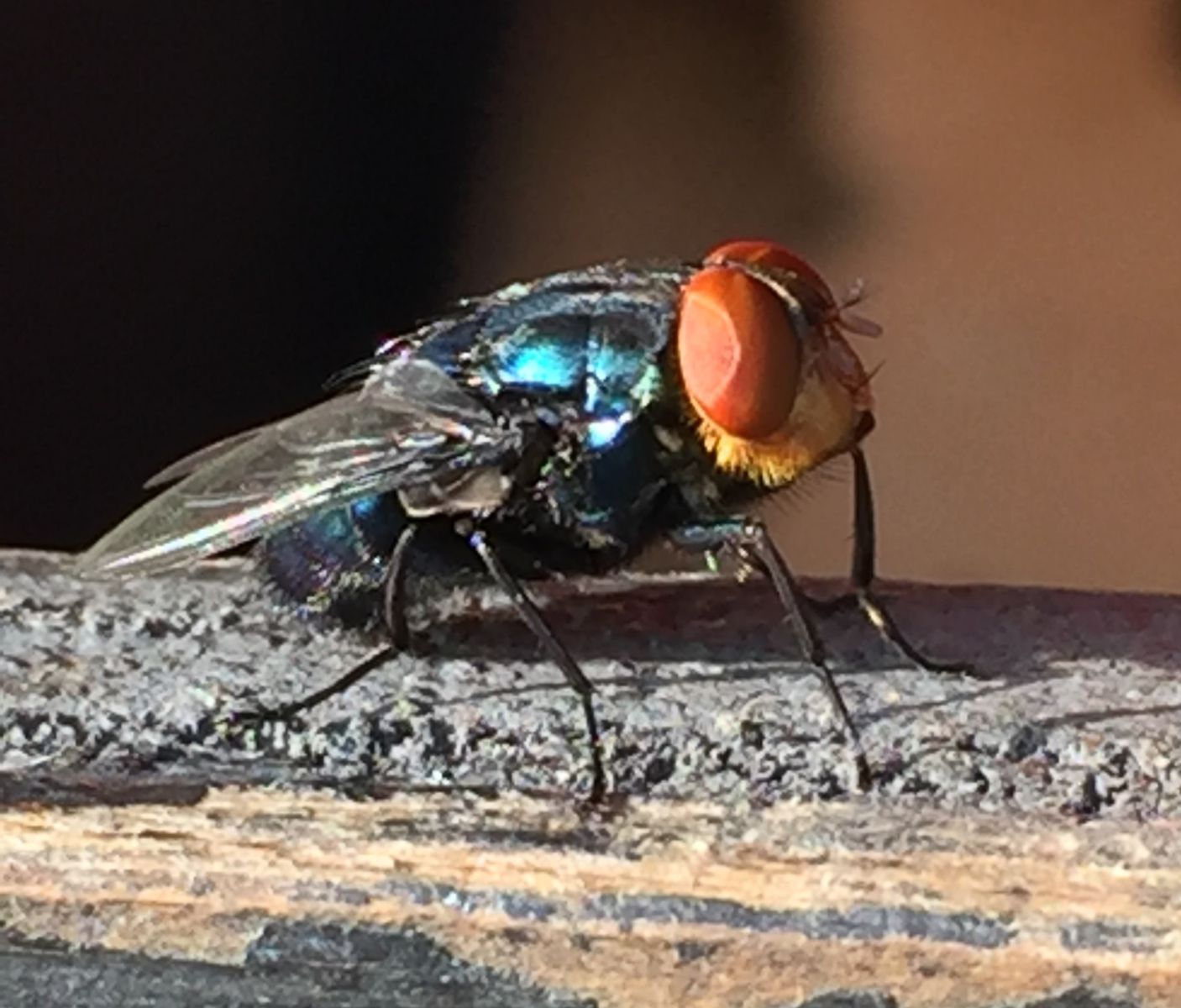
Screwworm flies are about the size of a common housefly (or slightly larger). They have orange eyes, a metallic blue or green body, and three dark stripes along their backs. / USDA photo
Key points about NWS:
• The NWS fly must be present for the worms to exist.
• NWS larvae, or maggots, feed on living tissue.
• The fly mates once in its lifespan, which is 21-30 days.
• One female fly can lay up to 2,800 eggs and may lay them in portions on multiple animals.
• The eggs are laid on wound edges. After the maggots hatch, they crawl into the wound & burrow until they reach bone.
• Once the maggots eat their way through tissue and mature, they fall off the animal.
“There are certain points where we can intervene, and we can stop production of the fly,” Hennebelle said.
The USDA has established a sterile fly dispersal facility in Edinburg, Texas, and is also building a sterile fly production facility in Edinburg.
Part of the current challenge is that animal husbandry practices have changed over time.
“What we hear from folks who do remember that time [before NWS was eradicated on the U.S. mainland] is they had a lot more workers. They spent a lot more time putting eyes on animals to try to find that straggler who might be infested, and they could treat it and control it at that time,” Hennebelle said.
According to the USDA’s Animal and Plant Health Inspection Service (APHIS), adult screwworm flies are about the size of a common housefly or slightly larger. They have orange eyes, a metallic blue or green body, and three dark stripes along their backs.
NWS infestation is a reportable condition. Producers should notify Georgia animal health officials and APHIS if they see signs their cattle are infested, which include cattle exhibiting irritated behavior or head shaking, smelling of decay and having maggots in wounds.
Georgia Department of Agriculture scientists have assembled traps to catch the NWS fly for surveillance. The department has also conducted response exercises as part of its preparation, Hennebelle said.
For more information about NWS, visit www.screwworm.gov.
Equine herpesvirus
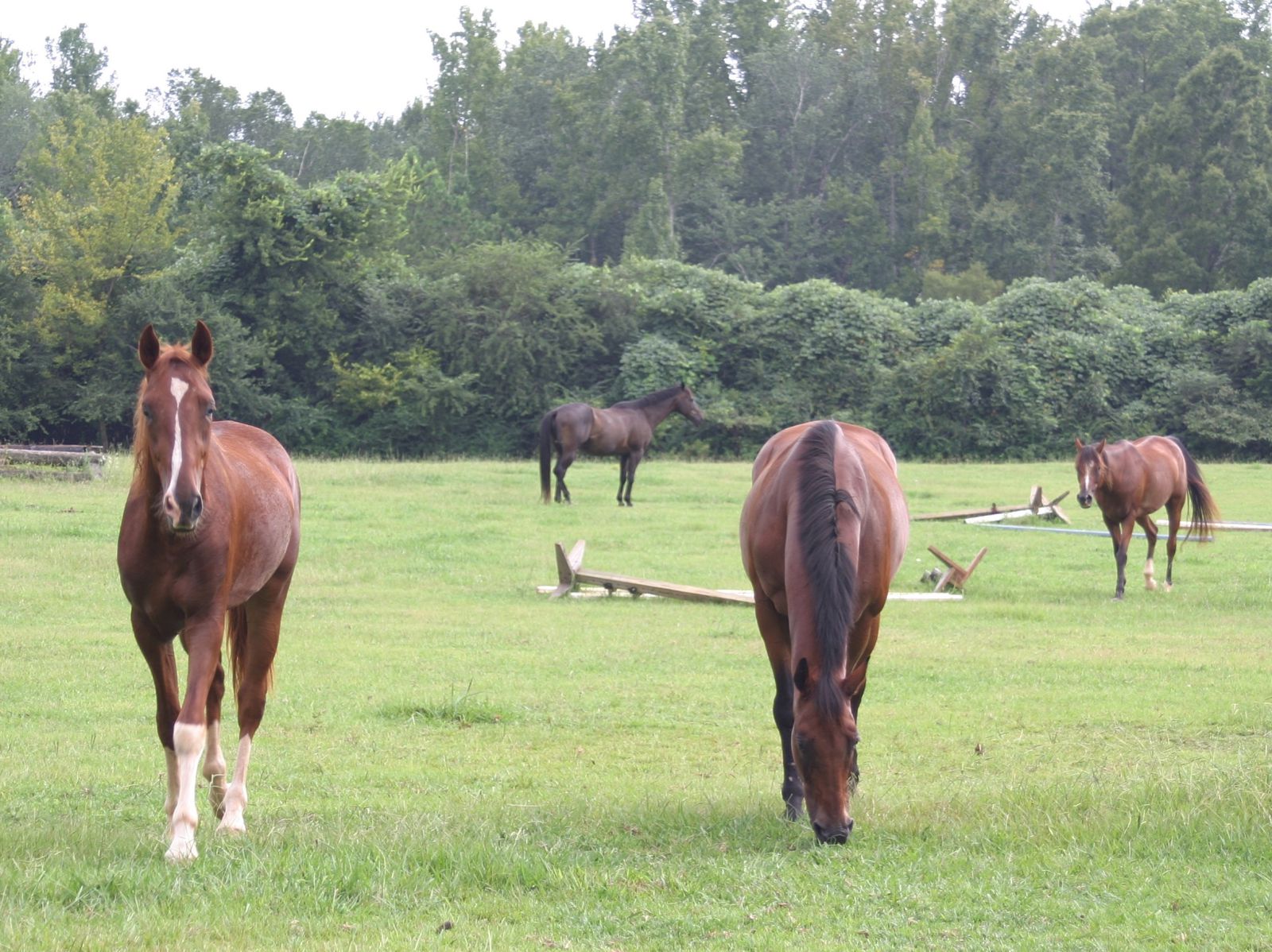
Concerns about equine herpesvirus in the U.S. emerged after horses at a Women’s Professional Rodeo Association event in Waco, Texas, tested positive in November. Georgia horse owners at the event isolated their horses. There have been no known detections of EHV in Georgia animals related to the Waco rodeo. The closest related detection of EHV as of Feb. 26 was in Louisiana.
Hennebelle noted that EHV is found regularly in the U.S.
“Horses have it, and they shed it all the time with no clinical signs,” she said.
For information about reportable animal diseases visit https://agr.georgia.gov/reportable-animal-diseases.